Nobody budgets for a mistake. They budget for floor space, a booth, and flights, then absorb the rest as the cost of doing business.
That rest is usually 30 to 50% of the total. Overtime labor, rush graphics, on-site utility markups, and a lead list nobody called. Each one traces back to a decision made months earlier.
Below are ten mistakes that quietly drain exhibitor ROI:
- Picking the wrong show
- Exhibiting without measurable goals
- Skipping pre-show promotion
- Budgeting only for booth space
- Untrained booth staff and no follow-up plan
We have installed enough booths at Local Exhibits to see the same errors repeat, and the fixes are almost always cheap compared to the damage.
1. Choosing the Wrong Trade Show
The most expensive mistake happens before you spend a dollar on design.
Many exhibitors book the same shows every year because they always have. Others pick by attendance headline, which measures crowd size rather than buyer concentration.
Do the Research First
Show organizers publish an exhibitor prospectus with attendee demographics, job titles, purchasing authority, and industry breakdown. Read it before you sign.
Two numbers matter more than total attendance:
- Attendees per exhibitor. A show with 300,000 attendees and 800 exhibitors gives you far better odds than one with 143,000 attendees and 4,500 competitors
- Percentage of attendees in your actual market. A general industry show with 10% relevance is worse than a niche event with 80%
What it costs: a full show budget, $20,000 to $100,000, spent in front of the wrong audience. Our show directory breaks down major events by industry if you are building a calendar.
2. Exhibiting Without Measurable Goals
“Increase brand awareness” is not a goal. It is a phrase that lets everyone avoid accountability.
Failing to set specific objectives is the most common trade show mistake, and it produces disjointed efforts across design, staffing, and follow-up because nobody is aiming at the same target.
Write Down a Number
| Vague Goal | Measurable Version |
|---|---|
| Brand exposure | 400 booth visitors, 60 qualified leads |
| Generate leads | 45 leads with complete context notes |
| Meet customers | 12 meetings booked with named accounts |
| Launch a product | 25 demos completed, 8 press conversations |
SMART goals give your booth design a purpose, your staff a target, and your finance team something to evaluate afterward.
What it costs: you cannot prove the show worked, so the budget gets cut next year regardless of whether it did.
3. Skipping Pre-Show Promotion
Relying entirely on foot traffic is a critical pre-show mistake, and it is common.
Around 85% of exhibitors run some pre-show marketing, and a large majority report increased booth traffic as a result. Exhibitors who promote generate roughly 46% more booth visits than those who wait for walk-ups.
Start Weeks Ahead
- Email your list with your booth number and one specific reason to visit
- Book meetings in advance with target accounts attending
- Post on social channels with a demo schedule
- Optimize your directory listing, since many attendees plan their route from it
- Ask the organizer about featured placement and promotional packages
Your exhibit is a marketing investment. Spending $60,000 on it and $0 telling anyone you will be there is the definition of a wasted opportunity.
What it costs: roughly a third of the booth traffic you paid for.
4. Budgeting Only for Booth Space
Floor space is the entry ticket, not the price of admission.
Total exhibiting costs typically run three to five times the space fee once design, freight, labor, and travel land. Booth space itself accounts for only 20 to 33% of most budgets.
The Costs That Blindside People
| Line Item | Typical Cost |
|---|---|
| Drayage, both directions | $1,200 to $7,500 |
| I&D labor | $100 to $200+ per hour |
| Electrical | $500 to $3,000 |
| Internet | $500 to $2,000 |
| Carpet | $3 to $8 per sq ft |
| Rush fees on late orders | 25 to 40% premium |
Build a realistic budget with a 10 to 20% contingency, then track spend daily during the show. Even a rough budget estimate helps when soliciting bids, since most exhibit houses will not move past initial discussions without a number to design against.
What it costs: overruns of 30 to 50%, discovered three weeks after the show. Our drayage guide covers the single line item that surprises people most.
5. Ignoring the Floor Plan
Booth location is the highest-leverage decision nobody discusses, and space usually sells first-come, first-served.
The same booth in two positions produces two different results. Corners, main aisles, and paths to food courts and session rooms all outperform dead-end aisles and back corners.
Read the Map Before You Book
- Request the floor plan the day it opens
- Look for corner positions with two open sides
- Note proximity to restrooms, food, and keynote rooms
- Check what is directly behind and beside you
- Avoid isolated pockets with no anchor exhibitor nearby
Waiting too long means taking whatever is left, which is generally what everyone else rejected.
What it costs: up to half your potential foot traffic, on identical spend.
6. Building the Booth In-House
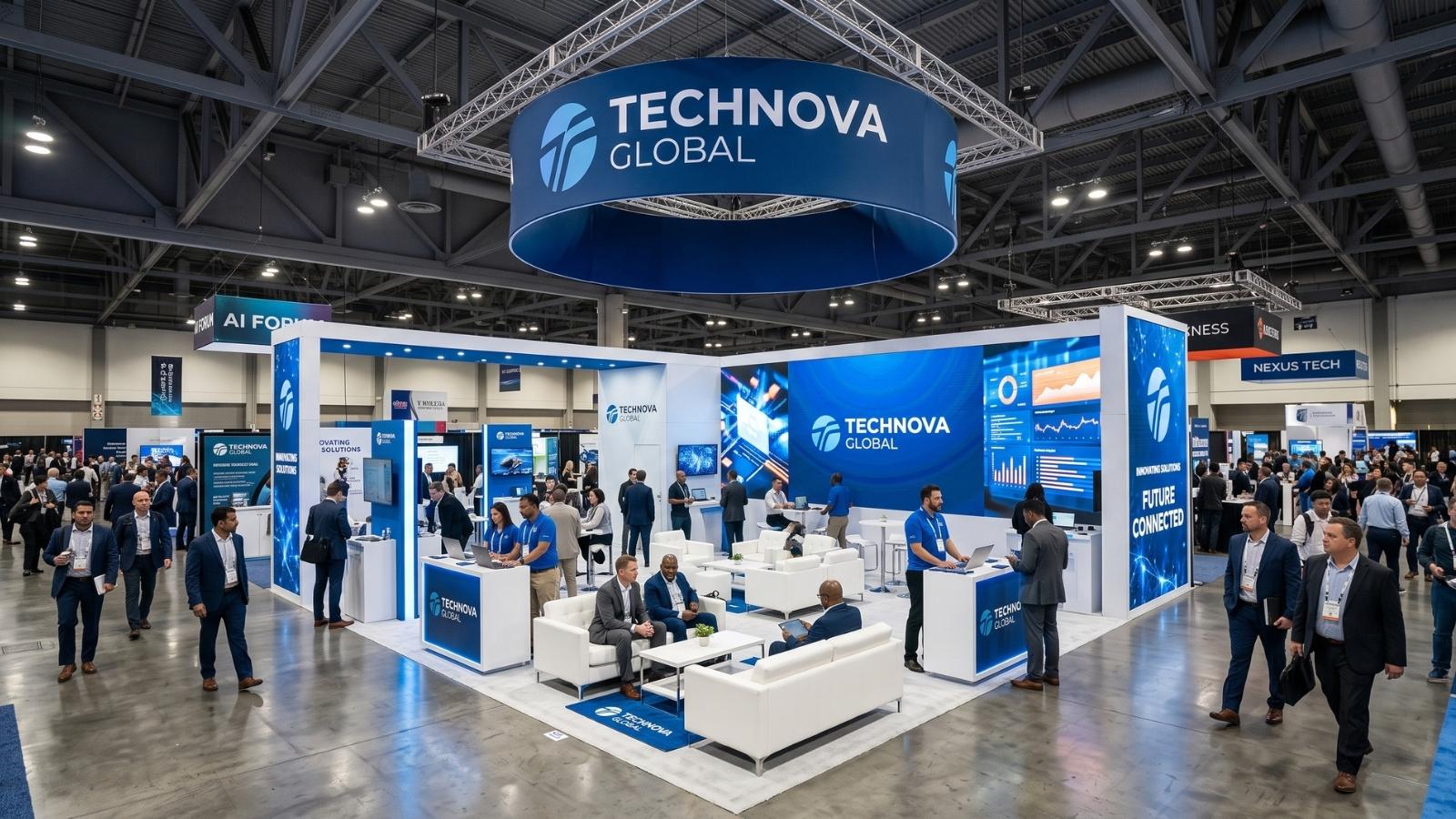
Companies try to save money by designing and building internally. It rarely works out cheaper.
An exhibit has to survive freight, meet venue fire and rigging codes, assemble in a labor window, and look sharp under convention hall lighting. Homemade booths usually fail at least one of those.
What a Professional Partner Handles
A booth builder fabricates. A full-service partner also files show service orders, optimizes crate weight to cut drayage, handles rigging paperwork, and puts a crew on site who has worked that hall before.
For companies exhibiting once or twice a year, renting is the cost-effective route and removes storage entirely.
What it costs: rework, rejected structures at move-in, and a booth that looks improvised next to competitors.
7. Sending Untrained Booth Staff
Anyone at your company can work the booth. That belief costs more than any design decision.
Booth staff are the face of your company on the show floor. Passive, distracted, or unqualified people convert a fraction of the same traffic.
What Trained Staff Change
Trained teams generate 3 to 5 qualified interactions per staffer per hour. Untrained teams manage one or two, and the records they capture are usually unusable.
Pick people who are outgoing and genuinely knowledgeable, then train them on:
- Greeting within five seconds and open-ended questions
- Qualifying role and timeline in under 90 seconds
- Lead capture with context notes, not just badge scans
- Trade show etiquette: no phones, no sitting, no huddling
Cap shifts at four hours. Engagement quality drops roughly 40% after that.
What it costs: half your leads, and the ones you get arrive without the context that makes follow up work.
8. Cluttered Messaging and Graphics
Attendees scan booths like a feed. If they cannot decode yours in three seconds, they keep walking.
Cluttered graphics deter people from stopping. So does trying to communicate six products on one back wall.
Fix the Hierarchy
One headline readable at 20 feet, one supporting line, then everything else at eye level where people stand close enough to read it. Roughly 60% of the panel should stay open.
Interactive displays and live product demos outperform dense copy every time, because they let a visitor understand the offering without reading anything.
What it costs: the stop rate, which determines every downstream number.
9. Starting Procurement Too Late
A useful benchmark: begin roughly 24 weeks before the show.
Custom design, engineering, and fabrication take six to eight weeks on their own, with crating and logistics consuming the rest. Compress that and you start sacrificing components to hit the deadline.
| Weeks Out | Milestone |
|---|---|
| 24+ | Show contract signed, budget set, partner selected |
| 16 | Design approved |
| 10 to 12 | Fabrication underway |
| 6 | Show service orders submitted |
| 4 | Graphics printed |
| 2 to 3 | Freight ships |
Late booking adds 25 to 40% to labor, shipping, and graphics. Advance deadlines on electrical and rigging carry the same penalty in reverse: order on site and you pay a markup.
What it costs: a quarter to a third more on the same booth, for the privilege of stress.
10. No Lead Capture or Follow-Up Plan
This is the costliest mistake on the list, and the most common.
You will see a claim that 80% of trade show leads never get followed up, usually attributed to CEIR. CEIR has said it did not produce that figure, and nobody has traced it to a real study. Treat it as folklore.
The verified picture is bad enough. Fewer than 70% of exhibitors have any formal follow-up process, and only about 22% respond within 24 to 48 hours.
Build the System Before You Fly
- Standardize capture. One method, used by everyone, with required context notes
- Qualify on the spot. Tag hot, warm, or cold before the next conversation
- Assign ownership to named reps before anyone leaves the venue
- Send within 24 hours. Open rates hit 48% at 24 hours against 21% at one week
- Personalize. Leads with context notes see 25 to 40% response rates versus about 3% for generic outreach
Roughly half of buyers choose the vendor that follows up first. Waiting a week hands the deal to whoever did not.
What it costs: the entire show. Everything else you did well becomes irrelevant.
Two More That Quietly Drain ROI
Neither shows up on an invoice, which is exactly why they persist.
Ignoring the Exhibitor List
The attendee list gets scanned. The exhibitor list rarely does, and it is full of potential clients, suppliers, and partners standing still for three days.
Read it before the show, flag companies worth meeting, and send someone to visit them. Some of the strongest B2B relationships start across an aisle rather than in your booth.
No Strategy for Measuring ROI
Only about a third of exhibitors track lead conversion rates. Without a measurement plan set before the show, you cannot assemble a credible report afterward.
Decide in advance what you will track: qualified leads, pipeline value, meetings booked, cost per qualified lead, and conversion at six and twelve months. Our guide to measuring booth performance covers what holds up in a budget review.
Work With Your Show Organizer
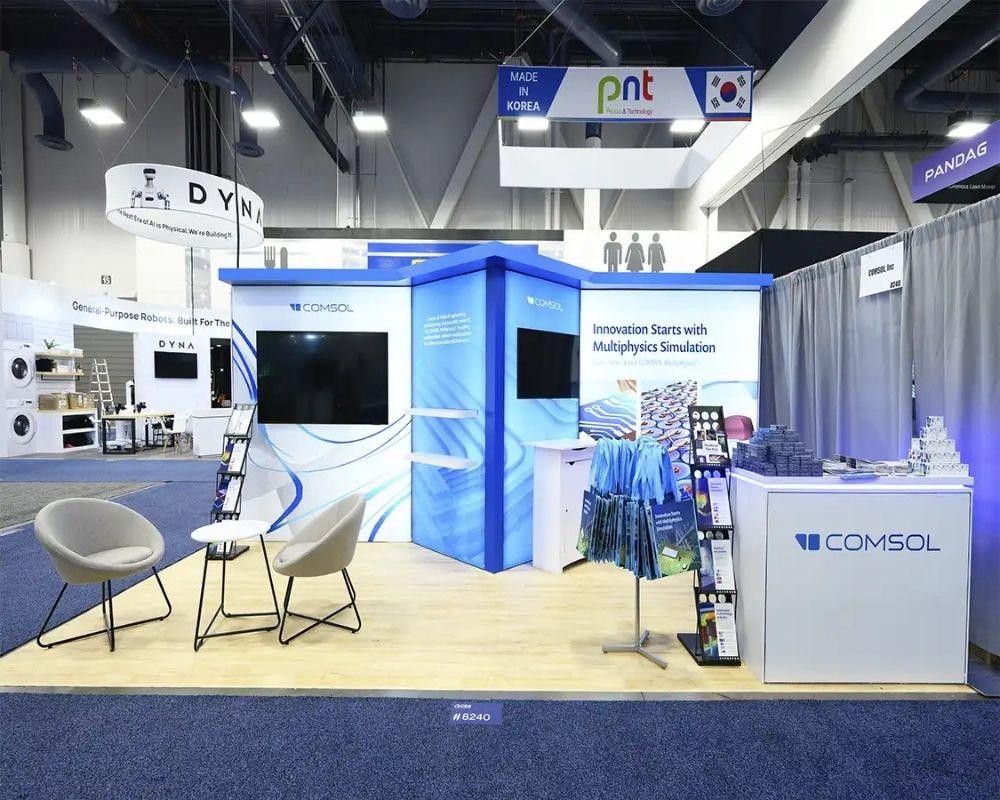
Most exhibitors treat the organizer as a landlord who collects a check. That relationship is worth far more than that.
What Organizers Offer for Free or Cheap
Trade show organizers want their exhibitors to succeed, because exhibitors who see results rebook. Ask what is available and you will usually find:
- Attendee lists or demographic data ahead of the show
- Directory listings you can upgrade with logos and product categories
- Email blasts to registered attendees, sometimes included in your package
- Speaking slots on education stages or exhibitor theaters
- Sponsorship bundles with badge lanyards, aisle signs, or session branding
- Early-bird discounts on space and services
Most of that goes unclaimed. Companies fail to ask, then assume the opportunity was not there.
Read Everything They Send
The exhibitor manual contains every deadline that carries a penalty: rigging submission, electrical orders, advance warehouse freight, labor calls. Skimming it is how exhibitors end up paying on-site markups.
Pro tip: put the organizer’s deadlines into your own calendar the week you sign the contract. Nobody is going to chase you, and a missed advance order deadline is a pure, avoidable expense.
Start Promoting Weeks Before Opening Day
Pre-show outreach is the cheapest thing on this list and the first thing that gets skipped.
A Four-Week Sequence
| Timing | Action | Channel |
|---|---|---|
| 4 weeks out | Announce your presence, booth number | Email, LinkedIn |
| 3 weeks | Invite target accounts to book a slot | Personal email from sales team |
| 2 weeks | Share what you are demonstrating | Social, directory listing |
| 1 week | Post demo schedule, reminder | Email, social |
| Day before | “We are on the floor tomorrow” | Email, LinkedIn |
Email marketing carries most of the weight here. A short, specific message to existing customers and prospective clients converts better than a broad campaign, because those people already know who you are.
Reach Three Groups, Not One
- Current customers. Easiest meetings to book and the strongest expansion conversations
- Potential prospects. Accounts already on your target list who happen to be attending
- Vendors and partners. Often overlooked, and frequently the source of the most valuable introductions
Invest time in the personal outreach. Twenty tailored emails to named accounts outperform two thousand templated ones, and they fill your calendar before you land.
Communicate One Clear Value Proposition
A booth that looks good but says nothing useful is a common mistake with an obvious fix.
Make It Understandable From the Aisle
Your value proposition needs to survive a three-second glance from someone walking past at speed. That means plain language, a specific outcome, and no internal jargon.
Weak: “Next-generation integrated solutions for enterprise transformation.”
Better: “Cut freight costs 25% in six months.”
The second one tells a trade show attendee whether to stop. The first one tells them nothing, so they keep moving.
Design Supports the Message
A well-designed booth measurably lifts lead generation, but only when the design serves the message rather than competing with it.
Practical checks before you approve artwork:
- Does the headline read at 20 feet?
- Can a general attendee tell what you sell without asking?
- Is there one focal point, or six competing ones?
- Does every panel support the same claim?
Create unique visual elements by all means. Just make sure the creativity draws attention toward the message rather than away from it.
Staff Carry the Same Message
Charismatic, well-briefed staff significantly increase lead generation because they reinforce what the graphics said. When five staffers describe the company five different ways, potential customers leave with no clear impression at all.
Give everyone the same three sentences. Then let them be themselves within that.
Pack and Ship Without Last-Minute Panic
Logistics mistakes cost money in the least satisfying way possible: you pay extra for something you already owned.
Logistics Costs Vary by Build
Material handling and utility fees belong in your budget from the first draft, and both scale with what you built. A heavy custom wood booth costs multiples of a lightweight aluminum and fabric system to move, on every show, in both directions.
| Booth Type | Relative Freight Cost | Why |
|---|---|---|
| Portable kit | Lowest | Ships in cases, often no drayage |
| Modular aluminum system | Low to moderate | Light frames, fabric graphics |
| Hybrid build | Moderate | Mixed materials |
| Full custom fabrication | Highest | Heavy crates, special handling |
A Packing List Prevents Shipping Fees
Every show produces at least one frantic overnight shipment for something someone forgot. Build a standing list and check it before the crates close:
- Graphics and spare panels
- Tools, hardware, and spare parts
- Extension cords and power strips
- Lead capture devices and chargers
- Printed collateral and business cards
- Cleaning supplies and a first aid kit
- Copies of all service orders and the exhibitor manual
Ship everything consolidated in one load. Multiple shipments trigger repeated minimum handling charges, which is one of the easiest costs to avoid.
Our support services team manages freight scheduling and marshaling yard timing, which removes the most common source of wasted time on move-in day.
Turn One Show Into a Program
The exhibitors who stay ahead treat each event as an input to the next one rather than a standalone project.
Debrief Within a Week
Get the internal team together while details are fresh:
- Which conversations turned into meetings?
- What did our best prospects have in common?
- What slowed the booth down?
- Which staff performed, and who should return?
Those notes shape booth design, staffing, and target lists for future shows. Skipping the debrief means starting from zero every year.
Automate the Nurture, Personalize the Top
Organize leads by segment and automate follow-up sequences for the middle and bottom tiers. Hot leads get personal outreach from the sales team within 24 hours.
Speed matters because interest decays fast. Waiting weeks diminishes prospect interest to the point where your message arrives as a cold email from a company they vaguely recall. Roughly half of buyers choose whoever follows up first, and industry surveys suggest only a small minority of exhibitors make contact within the first several weeks.
High-quality follow-up content is what separates a reply from a delete. Send the clinical summary, the pricing breakdown, or the answer to the exact question they asked at your booth, not a generic brochure.
Build Relationships, Not Just Lists
Trade shows are a great opportunity precisely because they compress relationship building into three days. The exhibitors who see real trade show success treat a scanned badge as the start of a conversation rather than the finish line.
Consistency compounds. Show up at the same events year after year, follow up properly each time, and you become the company prospects recognize when a budget finally opens.
Avoid the Expensive Ones, and Local Exhibits Handles the Rest
Most of these mistakes share a root cause. Decisions get made late, by people juggling four other projects, without anyone owning the parts that happen between design approval and move-in day.
A short checklist before your next show:
- Verify the audience against the exhibitor prospectus
- Write down a number you are trying to hit
- Start procurement 24 weeks out
- Budget three to five times your space fee, plus contingency
- Train staff and cap shifts at four hours
- Build the follow-up system before you travel
We handle design, fabrication, freight optimization, show service ordering, install, and dismantle as one scope, which removes most of the deadline-driven mistakes above from your plate. Look through our work, then tell us about your next show, and we will map out the timeline.
Frequently Asked Questions
What are common trade show mistakes?
Choosing the wrong show, skipping pre-show promotion, budgeting only for floor space, untrained booth staff, cluttered messaging, and no follow-up plan.
What are the worst trading mistakes?
For exhibitors, the costliest are no measurable goals, late procurement, and failing to follow up. Each wastes the entire show investment rather than part of it.
What is the biggest mistake small businesses make?
Booking a booth with no plan for the leads. Capture, qualification, and follow up should be built before the space contract is signed.
How much do trade shows cost?
Total costs typically run three to five times your floor space fee. A 10×10 lands around $10,000 to $30,000, a 20×20 island between $25,000 and $53,000.