All-inclusive” is doing a lot of work in most turnkey quotes. Two providers can use the identical word and deliver packages $12,000 apart in scope.
Turnkey means a coordinated exhibit package covering some combination of rental hardware, printed graphics, packing, freight support, installation, dismantle, and project management. Notice “some combination.”
Here’s what’s covered in this article:
- The four component groups in a standard package
- What is included by default
- What gets billed separately
- Turnkey pricing by booth size
- How to vet a provider
At Local Exhibits, we quote these as a single fixed number, so the comparison points below come from writing them.
What Turnkey Actually Means
You show up on move-in day and the booth is standing.
That is the whole promise. Structure, graphics, furniture, and lighting are in place, a dedicated project manager has handled the entire process from initial concept through final dismantle, and your team spends day one talking to prospects rather than chasing a missing crate.
Why It Exists
Exhibiting without a turnkey partner means managing multiple vendors: a designer, a fabricator, a graphics printer, a freight company, an install crew, and the venue’s service contractors. Each one has its own deadline and its own way of passing blame.
Turnkey consolidates that into one accountable partner and one invoice. The value is not only convenience. It is that somebody who does this weekly is watching the deadlines that carry penalties.
Pro tip: most turnkey booths are rentals. Ownership can be structured this way too, but the predictable package pricing that makes turnkey attractive comes from rental inventory.
The Four Component Groups
Almost every turnkey package organizes around these four categories.
| Group | What It Covers |
|---|---|
| Structure and hardware | Backwalls, towers, flooring, lighting, storage |
| Branding and graphics | Printed panels, header signs, hanging signs, floor graphics |
| Furniture and functionality | Reception counters, seating, product displays, demo stations |
| Logistics and services | Freight, drayage coordination, install, dismantle, project management |
If a quote does not address all four, it is a structure quote wearing a turnkey label.
Structure and Hardware
The physical booth, sized to your show space.
What Is Typically Included
- Backwall or perimeter walls, configured for your booth type
- Towers and vertical elements for height and visibility
- Flooring, usually carpet or modular hard surface
- Integrated lighting, typically LED spots or track
- Storage closet with a lockable door
- Hanging signs on island and peninsula footprints, where permitted
Packages scale across different booth sizes, from a 10×10 inline through 10×20, 20×20, 20×30, and 30×30. The same system reconfigures, which is what makes turnkey rental viable for exhibitors whose footprint changes between events.
Modular Design Underneath
Most turnkey hardware runs on reconfigurable aluminum extrusion with tension fabric graphics. That is deliberate: it assembles fast, ships light, and adapts to different venues without custom fabrication for each show.
Larger footprints and double-deck builds move into full design-build with structural engineering and venue coordination, which sits outside standard turnkey inventory.
Branding and Custom Graphics
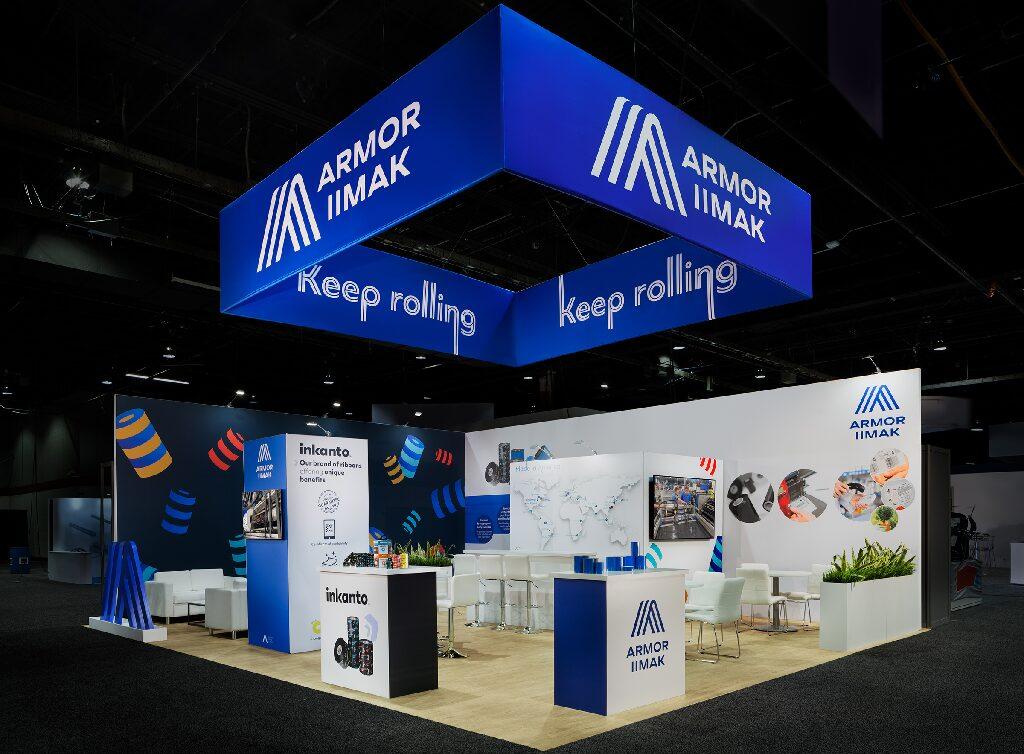
This is what makes a rental look like your booth rather than a booth.
Included in Most Packages
Custom graphics are printed fresh for each client, so the structure is shared, but the brand presence is not.
- Custom printed panels across backwalls and perimeter
- Header signs and overhead branding
- Counter and kiosk wraps
- High-impact graphics on towers and focal points
- Floor graphics where the package covers them
Good providers print in-house, which matters for color accuracy. Brand blue that shifts between the back wall and the counter face is the kind of detail attendees notice without knowing why the booth feels off.
Custom Exhibit Design Is Part of It
A proper turnkey package starts with custom booth design tailored to your brand identity and objectives, not a catalog selection. That means a layout built around your traffic flow, your demo needs, and your brand story rather than a stock configuration with your logo dropped on.
Custom trade show displays built this way still use modular hardware underneath. The difference is who decides where the walls go.
Furniture and Functionality
The parts that make the booth work as a space.
Standard inclusions:
| Element | Purpose |
|---|---|
| Reception counter | Greeting, lead capture, storage |
| Seating and lounge furniture | Longer conversations |
| Product displays and shelving | Showcasing what you sell |
| Demo areas | Hands-on product demos |
| Meeting table and chairs | Private or semi-private discussions |
| Monitor mounts | AV integration points |
| Waste bins and small fixtures | The invisible practical stuff |
Larger footprints support more: demo zones, presentation stages with seating, enclosed meeting rooms, and networking pods. Those are typically quoted as additions rather than assumed.
Integrated technology for product demos can be built in, though the hardware itself is usually a separate line.
Logistics and On-Site Support
The half of turnkey that justifies the word.
What a Full Package Handles
- Freight to the advance warehouse or show site
- Drayage coordination with the general contractor
- Professional installation by the crew, including union coordination where required
- On site setup supervision and testing
- On site support during show hours for repairs or adjustments
- Final dismantle and return freight
- Exhibit storage and asset management between events
A dedicated project manager oversees the entire process as a single point of contact. That role is the actual product. Someone has to verify warehouse cutoffs, label freight, order services, submit insurance certificates, coordinate union labor, inspect components, and arrange return transportation.
A low quote that skips this transfers all of it to an internal team that usually lacks the time and the venue contacts.
Pre-Show Trial Builds
Better providers assemble the booth before it ships, test lighting and AV, then send photos or a video walkthrough for approval. It costs them time and saves you the discovery that a panel is wrong at 7 a.m. on move-in day.
Our show services team handles on-site execution, and support services cover the planning and paperwork before anything ships.
What Turnkey Usually Does Not Include
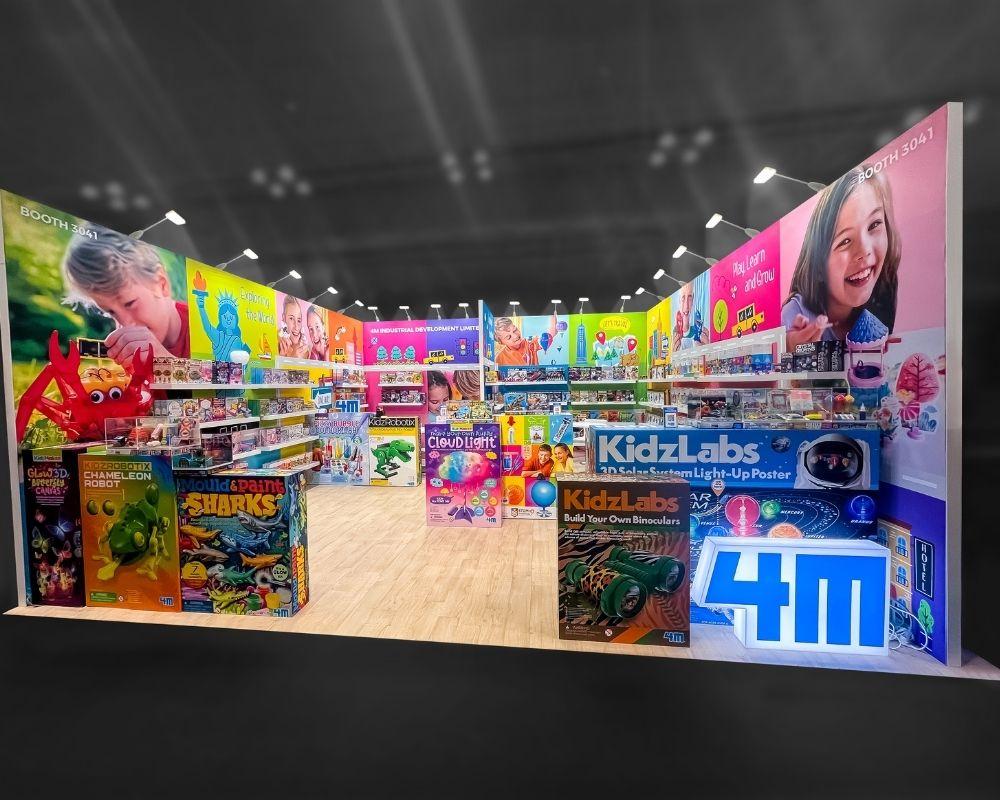
Read this section twice before signing anything.
Commonly Billed Separately
| Item | Typical Cost |
|---|---|
| Electrical | $500 to $3,000 |
| Internet and wi-fi | $500 to $2,000 |
| Drayage (the fee itself) | $1,200 to $7,500 |
| AV hardware | $500 to $1,000 per screen |
| Booth cleaning | Varies by size |
| Rigging for hanging signs | $1,000 to $3,000 |
| Floor space rental | Paid to the show organizer |
Most all-inclusive packages cover structure, graphics, furniture, and basic lighting, while AV, drayage, and utility fees are frequently billed separately. Confirm before assuming “all-inclusive” means all-inclusive.
The Drayage Distinction
This one catches people constantly. A turnkey package may include drayage coordination without including the drayage fee.
Coordination means they handle the paperwork and scheduling. The general contractor still bills your exhibit by weight, in both directions. Our drayage guide explains how that calculation works.
Three Questions That Settle It
- Does this quote include the drayage fee or only its coordination?
- Are electrical and internet ordered by you or by us?
- What happens to the price if the show adds an overtime install window?
Turnkey Pricing by Booth Size
Real brackets, not teaser rates.
| Booth Size | Turnkey Rental Range |
|---|---|
| 10×10 | $3,000 to $8,000 |
| 10×20 | $6,000 to $15,000 |
| 20×20 island | $15,000 to $45,000 |
| 30×30 island | $40,000 to $80,000 |
Expressed per square foot, modular turnkey rentals run roughly $55 to $150, while custom rental builds run $125 to $325 or more.
Because packages bundle graphics, furniture, and installation, turnkey often costs less than sourcing each element separately. You are buying the provider’s volume on freight and their existing crew relationships, not just hardware.
Show city affects the number. Union markets like Las Vegas and Chicago carry higher labor and drayage rates, so a locally supported team reduces freight in those markets. We cover Las Vegas, San Francisco, and San Diego, among others.
Turnkey vs Buying vs DIY
Three routes, different cost profiles and different workloads.
| Factor | Turnkey Rental | Custom Purchase | DIY |
|---|---|---|---|
| Upfront cost | Lower | Highest | Lowest |
| Cost per show over 5 shows | Moderate | Lowest | Unpredictable |
| Internal workload | Minimal | Moderate | Heavy |
| Design flexibility per show | High | Low | Low |
| Storage liability | None | Yes | Yes |
| Budget predictability | High | Moderate | Low |
When Turnkey Wins
- One or two shows a year
- Testing a larger footprint before committing
- A calendar with varying booth sizes
- A small marketing team with no logistics bandwidth
- First time exhibiting at a major venue
Total cost of ownership on a purchased exhibit, counting storage, maintenance, refurbishment, and freight across a full calendar, often exceeds turnkey rental without offering the ability to change the design per show.
When Buying Wins
Four or more shows a year in a consistent configuration, where amortizing a custom exhibit beats repeated rental fees. Many brands run a hybrid: an owned modular system for anchor shows and turnkey rentals for everything else.
How to Choose a Turnkey Partner
The vendor decision determines whether turnkey delivers what it promises.
What to Look For
- Flat-rate pricing with an itemized breakdown of what it covers
- In-house fabrication and printing for quality control and speed
- A named project manager rather than a support queue
- Local crews in the cities on your calendar
- Real-world examples at your venue and your footprint
Ask to see photos of completed builds at the specific show you are attending. Anyone can render a booth. Fewer can show you one standing at McCormick Place.
Red Flags
- A quote with no itemization
- “All-inclusive” with no written exclusion list
- No mention of who orders show services
- Reluctance to quote install and dismantle as a fixed number
- No storage or asset management answer if you are buying
Turnkey Is More Than Just a Structure
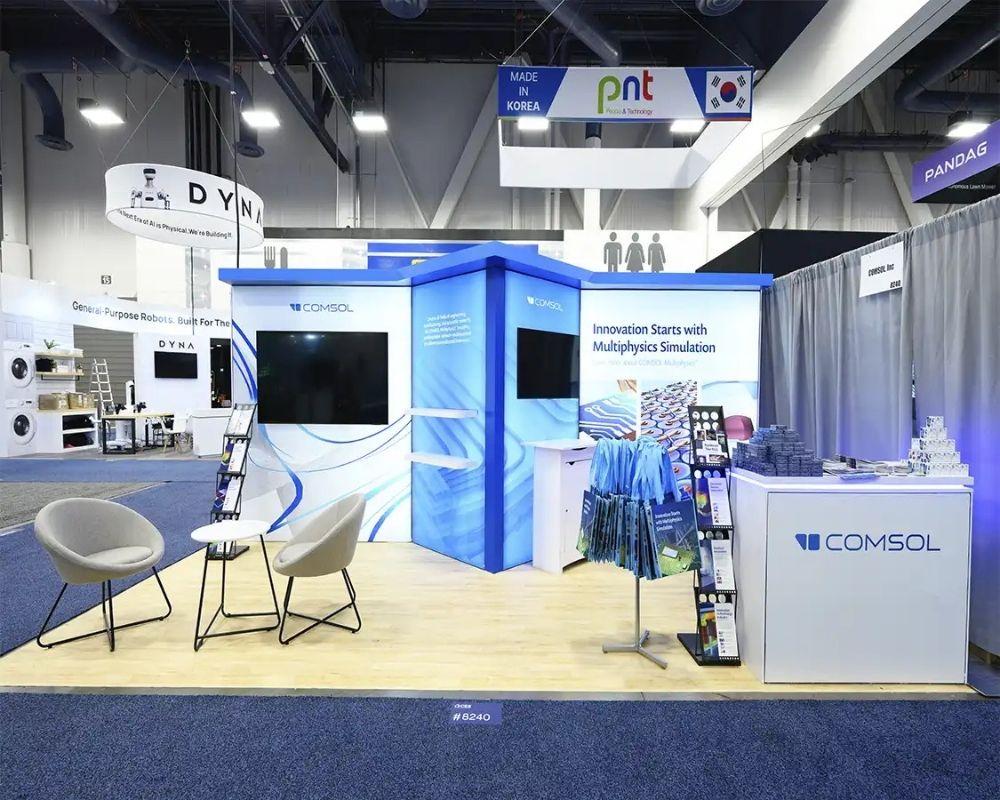
The word gets used loosely enough that some exhibitors assume turnkey means a stock booth with a logo on it. That is the cheap version, and it is not what a proper turnkey solution delivers.
Custom Design, Rented Hardware
The structure underneath may be modular inventory. The design on top is not.
A real all-inclusive exhibit solution starts with a custom design conversation: what your target audience needs to see, how traffic should move through the space, where demos happen, and what the booth has to accomplish at this specific show. Then the hardware gets configured to support that.
| What Is Standardized | What Is Custom |
|---|---|
| Aluminum frames and connectors | Layout and zoning |
| Counter and tower shells | Graphic design and messaging |
| Flooring systems | Color, materials, finishes |
| Lighting fixtures | Where light falls and why |
That split is what keeps custom trade show displays affordable. You pay for the design work and fresh graphic printing, not for fabricating a frame from scratch that gets thrown away after one event.
Booth Fabrication Where It Matters
Most turnkey packages allow custom fabricated elements alongside the modular backbone. A branded reception desk, a feature wall with dimensional lettering, a product fixture shaped around what you actually sell.
Those pieces carry the brand story and create the focal point that makes people stop. Everything else can be reconfigurable hardware nobody looks at twice.
Pro tip: put the custom fabrication budget into the two or three surfaces visitors stand closest to. The back wall reads from 40 feet and does not need millwork edges to do its job.
Turnkey Across Multiple Events
The strongest argument for turnkey rental services is not a single show. It is a calendar.
Different Footprints, One Look
Exhibitors rarely book the same booth size all year. A 10×20 inline at a regional show, a 20×20 island at the flagship, a tabletop at an association meeting.
Turnkey exhibit packages scale across all of them while keeping your trade show presence consistent. Same colors, same messaging, same brand identity, different configuration each time. Owning one fixed structure cannot do that without buying a second one.
Different Cities, Local Crews
Shipping an owned booth from a warehouse in one state to a show in another costs freight in both directions plus drayage on arrival. A provider with regional coverage can stage from closer inventory.
For a company exhibiting in San Francisco in spring, San Diego in summer, and Las Vegas in fall, that difference adds up fast across three shows.
One Event or a Full Season
| Show Count | Best Fit |
|---|---|
| One event | Turnkey rental, no question |
| 2 to 3 events | Turnkey rental, or a small owned kit |
| 4 to 6 events | Hybrid: owned modular plus rentals |
| 7+ events | Owned system with turnkey support |
Even at the high end, many brands keep a turnkey relationship for the shows where their owned booth does not fit or cannot travel economically. Exhibit rentals fill those gaps without a second capital purchase.
Design a Turnkey Booth That Generates Leads
A turnkey package removes logistics headaches. It does not automatically produce results. That part is still design and staffing.
Build Around the Objective
Before your next exhibition, decide what the booth is for. Then let the layout follow:
- Lead volume. Multiple entry points, several capture stations, open perimeter
- Product education. Demo stations with room for onlookers
- Relationship building. Seating, semi-private meeting space, quieter zones
- Launch visibility. Height, hanging sign, a single hero display
A booth optimized for all four at once usually attracts attention without converting it.
Elements That Draw People In
The features that consistently pull visitors off the show floor are the same regardless of whether you rented or bought:
- An open entry with no counter blocking the path
- Height that makes you findable from across the hall
- Layered lighting, which reads as professional from 50 feet
- A live demo with a posted schedule
- One clear message readable at 20 feet
None of those require custom fabrication. All of them are specifiable in a turnkey trade show booth design conversation, and most cost less than the elaborate structural features exhibitors tend to prioritize.
Make the Impression Last
A lasting impression comes from a conversation, not a wall panel. What the booth can do is create the conditions for that conversation: somewhere to stand, somewhere to sit, and a reason to stop in the first place.
Our team handles design, graphic printing, booth fabrication, freight, booth installation, and dismantle as one scope, with the same dedicated project manager across every show on your calendar. That consistency is what turns a series of one-off events into a successful trade show program rather than a recurring scramble.
One Number, One Contact, One Accountable Team
Turnkey solves a coordination problem more than a cost problem. The booth still has to be well designed, well lit, and staffed by people who engage. What turnkey removes is the twenty-item checklist between design approval and doors opening, and the budget surprises that show up when nobody owned it.
Before you sign any turnkey quote:
- Get the exclusion list in writing
- Confirm whether drayage is coordinated or covered
- Ask who orders electrical and internet
- Check that I&D is fixed, not hourly
- Verify they have crews in your show cities
We design, print, build, ship, install, dismantle, and store as one scope with one project manager and one fixed price. See our work for builds at every footprint, then tell us about your next event and we will send a quote with the inclusions spelled out.
Frequently Asked Questions
How much does a 20×20 trade show booth cost?
A turnkey 20×20 island rental runs $15,000 to $45,000. All-in with space, drayage, and services, expect $45,000 to $70,000 per show.
What is a turnkey booth?
An all-inclusive exhibit package where one partner handles design, fabrication, graphics, freight, installation, and dismantle, so you arrive to a finished booth.
What makes a good trade show booth?
Clear messaging readable at 20 feet, an open layout with multiple entry points, layered lighting, a working demo area, and trained staff.
How much does it cost to set up a booth at a trade show?
Installation and dismantle labor for a 20×20 runs $2,500 to $6,000, based on rates of roughly $125 to $475 per hour depending on the market.