Companies spend $80,000 on an exhibit, then hand it to four people who learned their booth role on the plane.
Staff performance is the single largest variable influencing event ROI. Teams that invest 20 to 40 hours preparing generate 30 to 50% more qualified leads.
Inside this guide:
- Headcount math by booth size
- Roles that prevent overlap
- Training timelines that work
- Shift rotation before fatigue
- Lead capture and follow-up
Local Exhibits installs 500+ booths a year. The tips below come from watching which teams work a floor well and which ones do not.
1. Calculate Headcount by Square Footage
Start with the number, not with who happens to be available.
The 50 Square Foot Rule
The most widely used benchmark in the exhibition industry is one staff member per 50 square feet of booth space during peak hours, with a minimum of two people at all times.
| Booth Size | Square Footage | Staff Per Shift |
|---|---|---|
| 10×10 | 100 sq ft | 2 to 3 |
| 10×20 | 200 sq ft | 3 to 4 |
| 20×20 island | 400 sq ft | 4 to 6 |
| 20×30 | 600 sq ft | 6 to 8 |
| 30×30 island | 900 sq ft | 10 to 14 |
Larger booths with a demo area, product theater, or interactive zone need dedicated staffers for those spaces regardless of total square footage. Our guide to booth sizes covers what each footprint holds.
Both Errors Cost You
Overstaffing crowds the booth. Six people standing around in a 10×10 reads as a wall of sales reps, and attendees route around it.
Understaffing is worse and more common. A qualified visitor who enters a fully engaged booth and waits more than 60 seconds is unlikely to wait longer.
Pro tip: schedule 10 to 15% more staff than the formula suggests to cover breaks, illness, and peak traffic surges. Having too many is far cheaper than having too few during a rush.
2. Do the Interaction Math First
Headcount tells you how many bodies. Capacity tells you whether that is enough.
Run the Numbers
A well-trained, properly staffed booth generates 3 to 5 qualified lead interactions per staffer per hour.
Use the formula: total exhibiting hours multiplied by staff on duty per shift equals total staff hours.
A three-day show running eight hours daily gives you 24 hours. With three staffers, that is 72 staff hours. At four interactions per hour, your booth can handle roughly 288 meaningful conversations across the show.
If you expect significantly more booth traffic than that, add people or accept that you will lose leads in the queue.
Set the Target Before You Arrive
Divide your lead goal by staff hours, and you get a per-person hourly target. That number turns a vague instruction to “work the booth” into something your team can actually hit.
3. Assign Specific Booth Roles
When everyone tries to do everything, nobody does anything well.
Five Core Roles
- Crowd gatherer. Works the aisle edge, pulls people in from the show floor
- Booth host. Greets visitors, orients them, routes them to the right person
- Product demonstrator. Runs live demos and answers technical questions
- Lead capture specialist. Collects contact information and logs context notes
- Booth supervisor. Manages shifts, supplies, metrics, and problems on site
Smaller booths combine roles. A 10×10 might run a host who also captures leads plus a product expert. A 30×30 needs every role filled twice over.
Lock Roles Six Weeks Out
Assign booth staff roles at least six weeks before the event so there is time to train against them. When roles are fuzzy, people bunch up in one spot and miss visitors entirely.
Add a floater or backup to cover unexpected gaps. Someone always gets stuck in a meeting or loses a voice by day two.
4. Mix Internal Staff With Event Staff
Neither group alone covers what a booth needs.
What Each Brings
Your internal team has the product knowledge and the authority to answer hard questions. Hired brand ambassadors bring energy, are trained specifically to engage attendees, and do not fade after four hours because they are not also managing their day job from the booth.
The strongest booth teams pair them: internal experts on demos and technical conversations, event staffing professionals on greeting, crowd gathering, and badge scanning.
Hiring Notes
- Staffing agencies streamline recruitment and provide vetted local talent in cities where you have no team
- Online job platforms work for shorter shows and smaller budgets
- Competitive compensation matters. Underpaying produces exactly the performance you paid for
If you are exhibiting outside your home market, hiring locally also removes travel and hotel costs from the equation, which often pays for the agency fee outright.
5. Train Four Weeks Before the Show
One briefing the night before is not training. It is a reminder.
A Cadence That Works
| Timing | Session | Content |
|---|---|---|
| 4 weeks out | Session one | Goals, brand messaging, target profiles, qualification criteria |
| 2 weeks out | Session two | Role-play, objection handling, demo practice |
| Day before | Final briefing | Key messages, role assignments, schedule, logistics |
Run at least two mock booth sessions with realistic objections. People who have said the words out loud once perform differently than people who have only read them.
Cover the Right Things
Training should include product knowledge, sales technique, and customer engagement, plus anything specific to your industry. Regulated sectors need compliance language covered before anyone steps on the floor.
Continuous feedback matters as much as the initial session. Correct habits during the show, not in the debrief afterward.
6. Qualify Every Visitor in 90 Seconds
The fastest way to waste a booth is spending twenty minutes with someone who will never buy.
Two Questions, Fast
Train every staff member to determine a visitor’s role and buying timeline within 60 to 90 seconds. A simple two-question rule usually does it.
Open-ended questions work better than yes-or-no prompts:
- What brought you to the show this year?
- What are you using for this today?
- What is not working about it?
- Who else on your team is involved in this decision?
“Can I help you?” gets a no. The questions above get a conversation.
Listen More Than You Pitch
Active listening is the skill that separates a good booth staffer from a talking brochure. Let the visitor describe the problem before you describe the product.
Good rule: if your staffer is talking more than half the time in the first two minutes, they are not qualifying. They are broadcasting.
7. Standardize the Lead Capture Process
Five people capturing leads five different ways produces a list nobody can use.
One Method, Everyone
Pick badge scanning or a digital form and require it of every staff member. Paper fallbacks create transcription errors and delays.
A badge scan is contact capture, not the finish line. Every record needs notes covering the visitor’s role, their need, and their timeline.
That distinction shows up directly in results. Leads with context notes see follow-up response rates of 25 to 40%, against roughly 3% for generic outreach.
Build an Escalation Path
Decide in advance what happens when a staffer meets a high-value prospect. Who gets pulled into the conversation? Who owns the follow-up? What happens if that person is busy?
Without a defined path, your best lead of the show gets a business card and a promise to be in touch.
8. Enforce Booth Etiquette Rules
The behaviors that kill booth traffic are boring and universal.
The Non-Negotiables
- No phones visible during show hours, ever
- No sitting unless in a seated meeting with a visitor
- No huddling. Three staffers talking to each other is a closed sign
- No eating or drinking in the booth space
- Stay out front, not behind the counter
- Make eye contact with people in the aisle
Attendees remember interactions, not structures. A welcoming staffer turns a passerby into a qualified lead. A distracted one sends them to the booth across the aisle.
Positive Body Language Is Measurable
Open posture, arms uncrossed, facing the aisle, and a genuine greeting within five seconds. These are trainable behaviors, not personality traits, and they change booth traffic within an hour of being corrected.
9. Rotate Shifts Before Fatigue Hits
Energy is a resource with a known decay rate.
Four Hours Maximum
Limit booth shifts to four hours. Engagement quality drops roughly 40% after the fourth consecutive hour on the floor.
Rotate high-intensity roles more often than that. Crowd gathering and demo delivery burn people faster than lead capture or supervision.
Build the Schedule Around Traffic
Use attendance data from past events to inform your staffing model. Most shows have predictable peaks: mid-morning and early afternoon on day one and two, with a sharp drop on the final afternoon.
Staff heavier through the peaks and lighter through the dead hours. Our show services team handles on-site logistics, so your supervisor manages people rather than freight.
10. Debrief Daily, Then Follow Up Fast
The show is not over when the hall closes.
Daily Reviews During the Show
Run a short standup each morning and a review each evening. Three questions:
- How many qualified conversations did we log?
- What questions kept coming up?
- What do we change tomorrow?
Multi-day shows give you the chance to adjust strategy and staffing mid-event. Most exhibitors waste it.
The 24-Hour Window
Follow up with qualified leads within 24 hours, and with everyone else within 48. Only 20 to 30% of exhibitors manage that window, which means speed alone puts you ahead of most of the floor.
The economics justify the urgency. CEIR data puts the cost to close a trade show lead at roughly $811, against $1,039 to $1,356 for a field sales lead. That advantage evaporates when leads are poorly qualified or never contacted.
Hold a Post-Show Debrief
Within one week, get the internal team in a room and review success metrics: qualified leads per staffer per hour, pipeline value created, demo completion, meetings booked.
Rate individual staff performance while it is fresh. Those notes build your roster for the next trade show, and tracking booth performance properly is what turns one good show into a repeatable program.
Why Staffing Decides Event Success
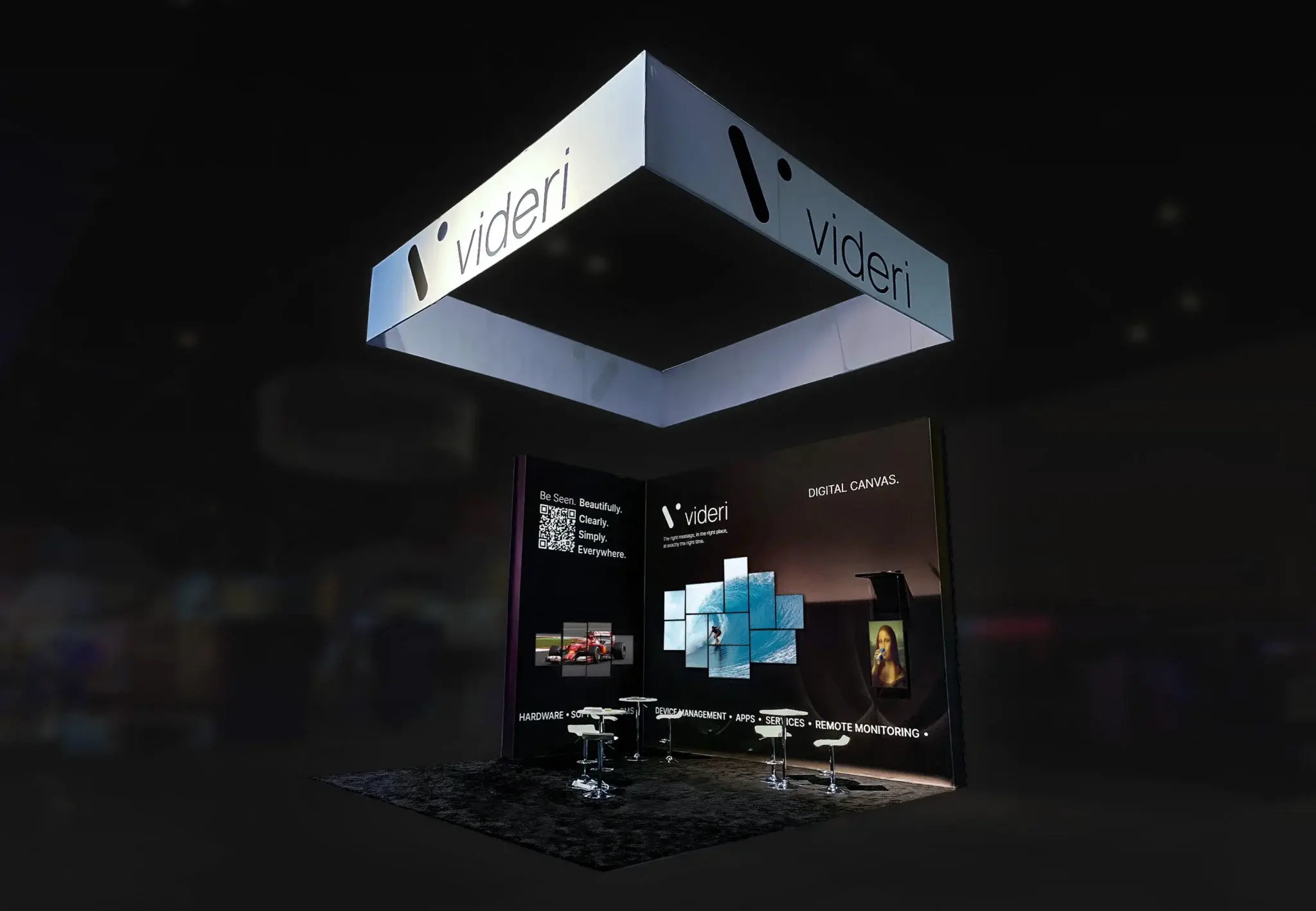
Exhibition industry research keeps landing on the same conclusion, and it makes most exhibit budgets look badly allocated.
The Budget Is Upside Down
Trade show participation typically splits spend across exhibit space, booth design, freight, services, and travel. Staffing lands near the bottom of that list, usually as a line item covering flights and hotels rather than preparation.
Yet the booth cannot close anything. People do. A structure that took four months to build gets judged in the eight minutes an attendee spends near it, and the variable in those eight minutes is the person standing there.
Across the trade show industry, the exhibitors who consistently generate leads at scale treat their booth team with the same rigor they apply to fabrication drawings.
What Trained Staff Change
| Outcome | Untrained Booth | Trained Booth |
|---|---|---|
| Qualified interactions per hour | 1 to 2 | 3 to 5 |
| Lead records with useful context | Rare | Standard |
| Follow-up response rate | Around 3% | 25 to 40% |
| Visitors lost to wait times | High | Managed |
None of that requires a bigger exhibit space. It requires a staffing plan written before anyone books a flight.
Buyers Are in the Room
Roughly 81% of trade show attendees have buying authority, which makes the show floor a powerful platform for reaching decision makers who ignore cold outreach every other week of the year.
That access has a short shelf life. Your team either recognizes and qualifies those people during a three-day window or watches them walk to the next booth.
Build a Staffing Plan Around Your Goal
Different objectives need different teams. Event planners who skip this step end up with a generic roster that serves no objective particularly well.
Start With the Primary Goal
| Primary Goal | Team Weighting | Success Metric |
|---|---|---|
| Lead generation | Qualifiers and lead retrieval specialists | Qualified leads per staffer per hour |
| Increasing brand awareness | Crowd gatherers and brand ambassadors | Booth visitors and impressions |
| Product education | Demonstrators and technical experts | Demo completion rate |
| Partnership development | Senior sales team and executives | Meetings held with target accounts |
A booth chasing brand visibility staffs differently than one chasing pipeline. Decide which one you are running before you assign names.
Match Staff to the Environment
Trade show environments vary more than most exhibitors plan for. A packed convention center hall demands loud, high-energy engagement. A quieter conference space attached to an association meeting rewards a calmer, consultative approach.
Networking events in the evening need different people again, usually your relationship builders rather than your product specialists.
Pro tip: walk the floor plan before finalizing the roster. A booth beside a noisy demo needs staff who can hold a conversation over it, and a booth in a low foot traffic corner needs an aggressive crowd gatherer more than an extra closer.
Key Qualities to Screen For
Whether you are using internal people or hiring professional trade show staffing, the same traits predict performance:
- Clear communication. Explains complex things simply, without jargon
- Genuine curiosity. Asks questions rather than reciting features
- Physical stamina. Eight hours standing on concrete is the job
- Product fluency. Enough depth to answer follow-ups credibly
- Composure. Handles a rush of booth visitors without visible stress
Experienced staff cost more and are worth it at any show where the cost of a missed conversation exceeds the hourly rate, which is most of them.
Coordinate Your Team Across the Event Schedule
A staffing plan that exists only on paper falls apart by lunchtime on day one.
Map People to the Schedule
Build a grid covering every hour the hall is open, with named people in named roles. Include setup, teardown, and any networking events or receptions attached to the show.
Do not forget the gaps that catch teams out:
- Early-morning badge pickup and booth prep
- Keynote hours when the floor empties and staff wander
- The final afternoon, when attendance drops but qualified stragglers appear
- Evening events where your sales team is representing the brand without a booth around them
Run Regular Check-Ins
A supervisor doing regular check-ins throughout the day catches problems while they are still fixable. Low energy in a section, a demo unit acting up, a lead scanner that stopped syncing.
Short and frequent beats long and scheduled. Ninety seconds per staffer, twice per shift, is usually enough.
Give Everyone the Same Brief
Every person on the floor should be able to answer three things identically: what the company does, what you want a visitor to do next, and where to route a question they cannot handle.
When those answers vary by staffer, potential customers get three different impressions of the same brand, and none of them lands as a lasting impression.
Design the Booth Your Team Can Work
Staffing and structure are one problem, not two. A booth with a counter across the front forces your team to work from behind a barrier. A booth with no meeting space sends serious conversations into the aisle.
We factor staffing into the drawings: aisle-facing positions for greeters, a demo zone with room for onlookers, and somewhere to sit when a conversation turns into a negotiation. If you know how many staff you plan to field, tell us early and the layout will support them rather than fight them.
Great Booths Need Great Teams, and Local Exhibits Builds Both Halves
Your exhibit is the stage. Your people are the performance. Attendees leave remembering a conversation, not a wall panel, and the gap between a booth that generates pipeline and one that generates a pile of badge scans is almost always the team standing in it.
Before your next show:
- Run the 50 square feet formula, then add 10 to 15%
- Assign named roles six weeks out
- Start training four weeks out, role-play included
- Cap shifts at four hours
- Standardize lead capture and require context notes
- Follow up within 24 hours
We design booths with staffing in mind: open entries that let greeters work the aisle, demo zones with room for a crowd, and meeting space where qualified conversations can continue. Take a look at our work, then tell us what your team needs to accomplish on the floor.
Frequently Asked Questions
What are common booth mistakes?
Understaffing, phones out, staff sitting or huddling, no defined roles, badge scans without context notes, and follow-up that arrives a week late.
How to attract people to your booth?
Station a crowd gatherer at the aisle edge, run live demos on a posted schedule, keep the entry open, and greet every passerby within five seconds.
What makes a good expo booth?
Clear messaging readable at 20 feet, an open layout, layered lighting, a working demo, and trained staff who qualify visitors in under 90 seconds.
What are some cool ideas for a trade show booth?
Live demo theaters, branded games with leaderboards, product configurators on touchscreens, VR walkthroughs, photo installations, and coffee or food sampling counters.