Search this question and the answers range from $12,000 to $150,000. Both are technically correct, which is exactly the problem.
Some quotes cover the structure only. Others include space, freight, labor, and services. Nobody says which, so exhibitors budget against one number and get invoiced against another.
Ahead, the full picture:
- What 400 square feet of island space costs
- Rental, modular, and custom build pricing
- Graphics, lighting, and AV
- Drayage, labor, and show services
- A complete sample budget
We quote islands at this size constantly at Local Exhibits, so these are working brackets rather than headline numbers.
The Short Answer
A 20×20 island gives you 400 square feet, open on all four sides. Here is what that costs depending on what is included.
| What the Number Covers | Typical Range |
|---|---|
| Rental structure only | $16,000 to $40,000 |
| Custom build only | $30,000 to $80,000 |
| Quality modular build and graphics | $18,000 to $35,000 |
| All-in, rental route | $45,000 to $70,000 |
| All-in, custom route | $60,000 to $150,000+ |
The Rule of Three
The fastest sanity check in the industry: take your booth space rental and multiply by three.
A 20×20 space at $15,000 to $22,000 means a realistic total of $45,000 to $66,000. Exhibit space typically represents around 30% of total show costs, with the remaining 70% covering design, shipping, drayage, installation, and staffing.
Most exhibit houses report clients spending roughly 2.5 to 2.8 times their space rental on everything else, so the rule holds up even with recent inflation in labor and freight.
Booth Space Rental
This is the organizer’s invoice, and you cannot negotiate it.
Island space commonly runs $35 to $65 per square foot, putting a 400 square foot footprint at $14,000 to $26,000 before premiums. The audited industry-wide range is wider, $20 to $138 per square foot, with a median around $59.
| Rate | 400 sq ft Total |
|---|---|
| $35/sq ft | $14,000 |
| $59/sq ft (median) | $23,600 |
| $100/sq ft | $40,000 |
| $138/sq ft | $55,200 |
Island footprints usually carry a premium over inline space, and prime positions near entrances or main aisles add another 20 to 50%.
Pro tip: book early. Space sells first-come, first-served, and waiting means taking whatever the other exhibitors passed on.
The Exhibit Itself
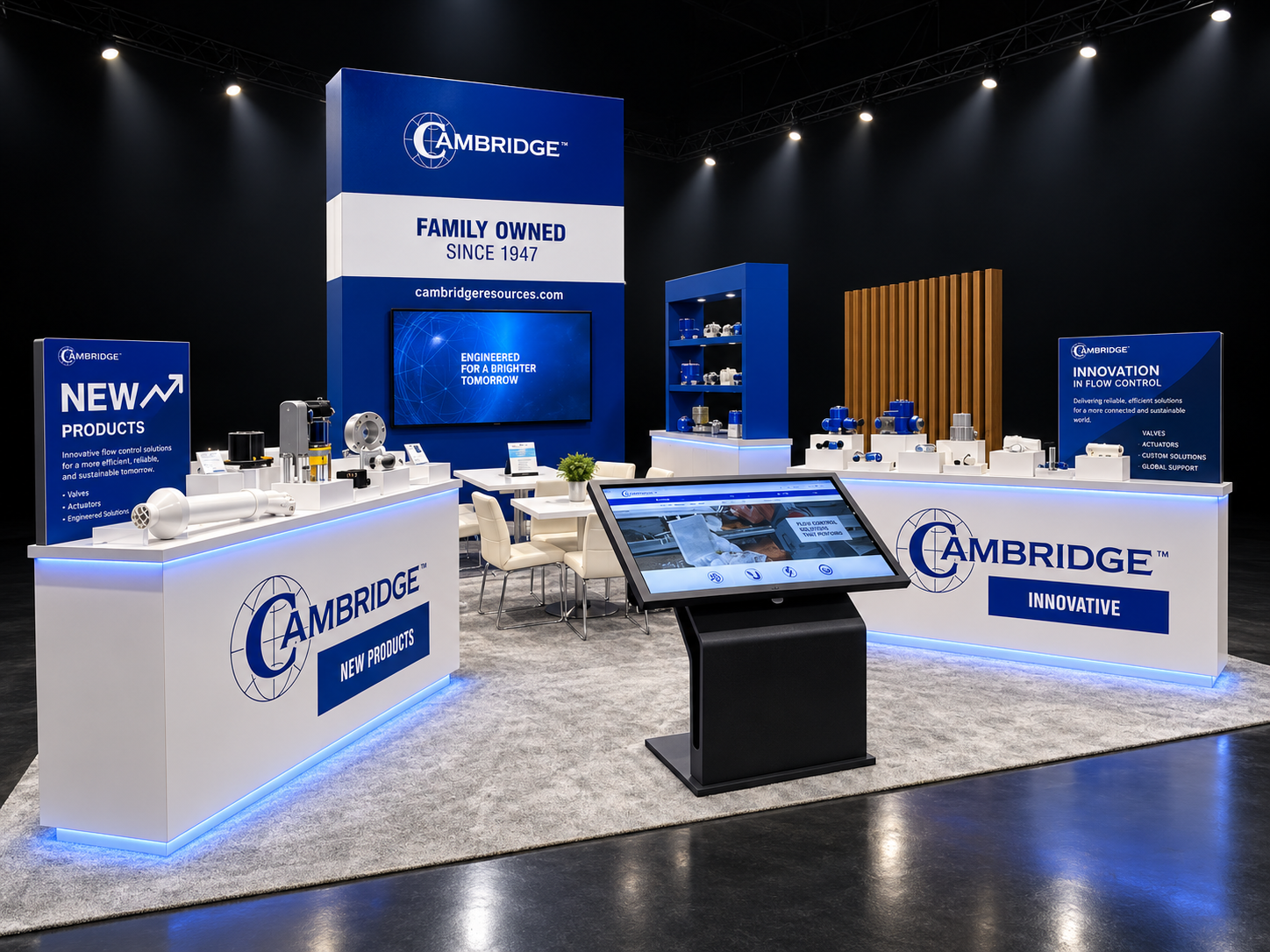
Three routes, three very different cost profiles.
Rental Packages
All-in island rentals run $16,000 to $40,000, generally including graphics, install, dismantle, and freight. Full-service providers commonly quote a 20×20 rental in the $28,000 to $32,000 range with fixed pricing.
Renting suits single events and companies whose footprint changes from show to show. No storage, no maintenance, no depreciation.
Modular Systems
A quality modular frame with SEG fabric graphics, furniture, and integrated lighting lands at $18,000 to $35,000. Custom modular systems that reconfigure between a 10×10 inline and a 20×20 island run $8,000 to $30,000 depending on complexity.
This is the sweet spot for multiple shows. Modular ownership typically breaks even after two or three events, and over 60% of new exhibit purchases are now reconfigurable systems.
Custom Fabrication
Custom builds start around $40,000 and run to $80,000 for a 20×20, with per-square-foot pricing of $100 to $250 depending on structure, technology, and finish detail.
You get a show-stopping exhibit built specifically around your brand. You also get heavier crates, higher drayage on every show, and an asset that needs storing.
| Route | Best For | Break-Even |
|---|---|---|
| Rental | 1 to 2 shows per year | Never needed |
| Modular | 3 to 6 shows per year | 2 to 3 shows |
| Custom | 4+ shows, consistent footprint | 3 to 4 shows |
Our rental versus purchase comparison runs the full lifecycle math.
What Pushes the Structure Price Up
Two 20×20 quotes can sit $30,000 apart. Here is why.
The Big Movers
- Construction type. Aluminum extrusion and tension fabric cost far less than custom millwork covering the same footprint
- Curves and angles. Radius corners and non-rectangular forms require custom tooling and add significantly over flat panels
- Height. Towers, arches, and hanging signs bring engineering and rigging costs
- Wood panels and millwork. Individual custom fabricated panels can run well over a thousand dollars each
- Double deck. A second level adds engineering, permits, extra labor, and freight weight
- Storage and product displays. Built-in shelving, counters, and monitor mounts each price separately
Design and Project Management
Concepting, specifications, and 3D renderings generally run $5,000 to $15,000 depending on complexity. Project management, meaning the coordination of design, production, delivery, and installation, typically adds 10 to 20% of total booth expense.
Those are real line items. A quote that omits them is not cheaper; it just moves the work to your marketing team.
Graphics, Lighting, and AV
The elements that determine whether anyone stops.
Graphics
Fabric graphics on SEG frames cost less than rigid substrate, ship lighter, and refresh cheaply when you rebrand. Backlit systems cost more and read dramatically brighter from across the show floor.
Entry-level backlit kits start around $1,500 and reach $5,000 for a complete system, which makes integrated lighting one of the better value investments available.
Lighting
| Setup | Cost |
|---|---|
| Individual fixtures | $80 to $110 each |
| Simple LED spot and track package | $3,000 to $5,000 |
| Full architectural lighting design | $10,000 to $150,000 |
For most 20×20 exhibitors, $3,000 to $5,000 buys layered lighting that transforms how the booth reads under convention hall ceilings.
AV Technology
This is where estimates get destroyed. AV can triple an initial number if it is not scoped early.
- Monitors and projectors: $500 to $1,000 each
- LED video wall tiles: roughly $350 per 18-inch tile, so a modest 6-foot wall exceeds $5,000 in rental alone
- Technical AV labor: around $150 per hour, with most installs taking one to two days, or $2,400 to $4,800
Buying your own monitors usually beats renting them at every show. A 55-inch screen that rents for $600 to $1,200 per show costs $400 to $600 to own.
Shipping, Drayage, and Labor
The category most first-time exhibitors underestimate, and it scales with what you built.
Material Handling
Drayage covers moving your crates from the loading dock to your booth space and back. It is billed per hundredweight, typically $80 to $250 per 100 pounds with a minimum charge.
A 20×20 custom booth commonly weighs 1,500 to 3,000 pounds crated, which puts drayage at $1,200 to $7,500 per show before the return move.
Weight is the only variable you control, and it pays twice. Aluminum and fabric systems cut weight 40 to 60% against wood construction. Our drayage guide explains exactly how the calculation works.
Installation and Dismantle
I&D labor for a 20×20 typically runs $2,500 to $6,000, based on rates of roughly $150 per hour in most markets and $125 to $475 per hour in the most expensive ones.
Major union markets cost more. Las Vegas, Chicago, and Boston can run 30 to 50% higher than Orlando or Dallas due to union rules, and installation must be performed by union labor at those venues.
Good rule: get I&D quoted as a fixed number. Hourly estimates are the single most common source of a surprise invoice.
Freight
Shipping to the show depends on distance, weight, and timing. Expedited freight for a missed deadline costs multiples of standard ground.
Show Services and Utilities
Billed separately by the venue, through exclusive contractors.
| Service | Typical Cost |
|---|---|
| Electrical (20-amp outlet) | Around $940 at major venues |
| Total electrical for a lit 20×20 | $1,500 to $4,000 |
| Internet | $500 to $2,000 |
| Carpet or flooring | $3 to $8 per sq ft |
| Furniture rental | $500 to $2,000 |
| Booth cleaning | Varies by square footage |
| Rigging for hanging signs | $1,000 to $3,000 |
Insufficient power planning ranks among the top exhibitor complaints, and tech-heavy booths often need multiple dedicated circuits.
Order everything before the advance deadline. On-site ordering carries a markup that is entirely avoidable, and our support services team files these against the right dates.
A Full 20×20 Sample Budget
Numbers on a page beat percentages.
| Line Item | Rental Route | Custom Route |
|---|---|---|
| Booth space (400 sq ft) | $20,000 | $20,000 |
| Exhibit structure and graphics | $28,000 | $50,000 |
| Lighting package | Included | $4,000 |
| AV and monitors | $3,000 | $6,000 |
| Drayage (both ways) | $2,500 | $6,000 |
| Freight | $2,500 | $4,000 |
| I&D labor | Included | $5,000 |
| Electrical, internet, rigging | $4,500 | $5,500 |
| Flooring and furniture | Included | $3,000 |
| Subtotal | $60,500 | $103,500 |
| Contingency at 15% | $9,000 | $15,500 |
| Total | ~$69,500 | ~$119,000 |
Travel, staffing, and promotional items sit on top of both columns. A six-person team at a three-day show adds $10,000 to $18,000.
Getting Long-Term Value From the Spend
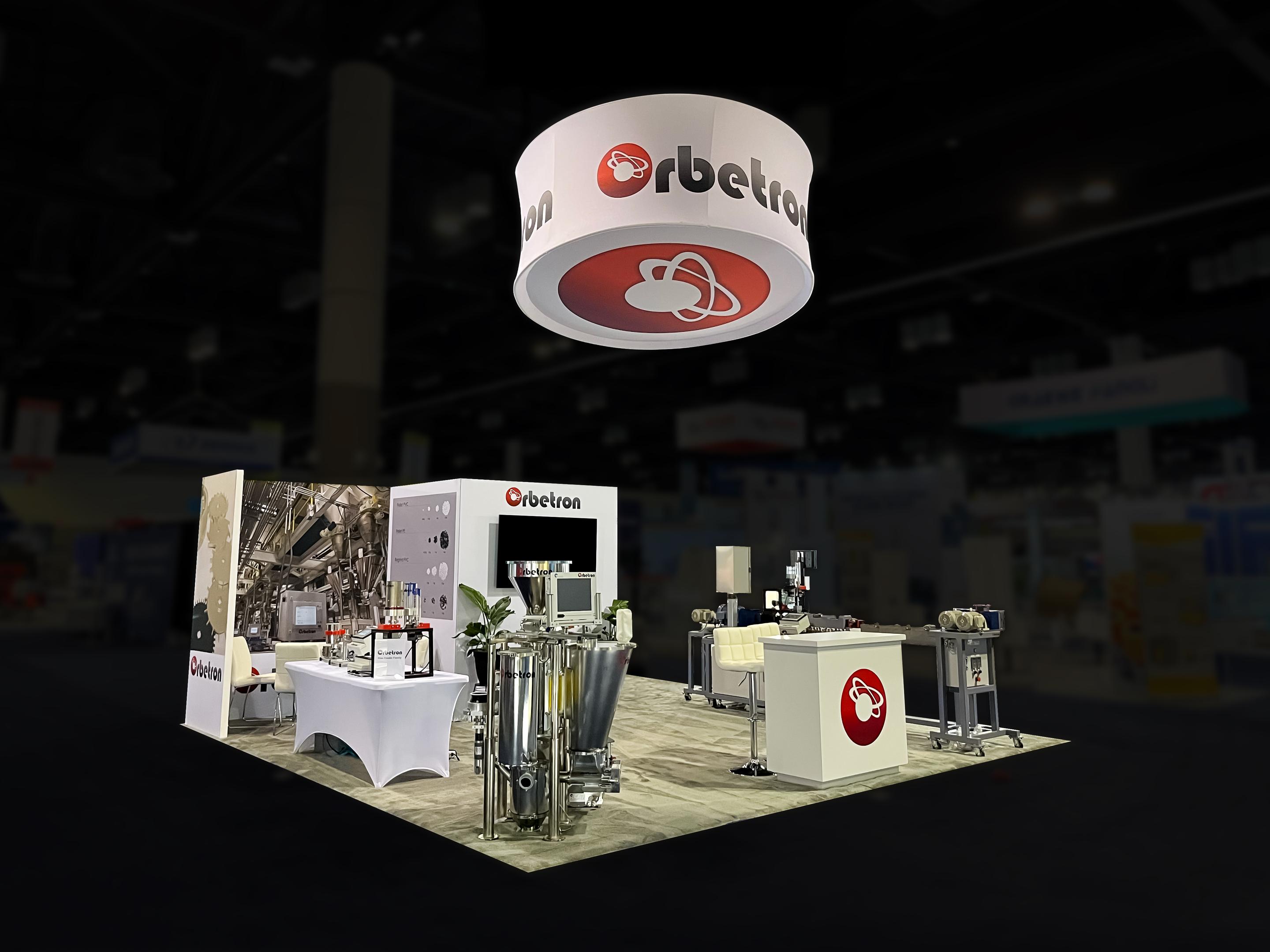
Cost per show matters more than sticker price.
Amortize Across Multiple Events
A $32,000 modular 20×20 used at six shows costs roughly $5,300 per show in structure. The same six shows on rental at $28,000 each costs $168,000.
That is the entire argument for buying, and it only works if the system reconfigures. A rigid custom build that fits one footprint sits in storage whenever you book a different size.
Systems with tool-free assembly also cut labor hours at smaller shows where a full union call is not required.
Where to Save
- Ship lighter and consolidate crates
- Refresh graphics on an existing frame rather than rebuilding
- Buy monitors instead of renting them repeatedly
- Order utilities before the advance deadline
- Book 24 weeks out to avoid 25 to 40% rush premiums
Where Not to Save
Lighting and graphics. They cost the least and determine whether anyone walks over. A $70,000 booth lit by convention hall fluorescents looks like a $20,000 booth.
Judge It Against Leads
Target a cost per qualified lead of $75 to $150 and work backward. If a 20×20 at $70,000 produces 500 qualified leads, you are at $140 each and comfortably ahead of field sales at $259.
Measuring booth performance is how you find out whether the footprint earned its cost or just filled it.
What You Get at Each Price Point
The same 400 square feet buys very different things depending on where you land on the scale.
Three Tiers, Honestly Described
| Tier | Structure Cost | What It Includes |
|---|---|---|
| Entry | $8,000 to $20,000 | Modular frame, fabric graphics, two counters, basic lighting, no AV |
| Mid | $20,000 to $40,000 | Backlit towers, hanging sign, demo stations, integrated lighting, monitors, flooring |
| Premium | $40,000 to $80,000+ | Custom fabrication, LED video wall, enclosed meeting space, architectural lighting, custom millwork |
Entry-tier island exhibits look clean and get the job done. They do not look expensive, which matters at flagship shows where competitors are spending five times more.
Mid-tier is where most exhibitors should land. It buys an eye-catching display with height, light, and somewhere to run product demos, without the fabrication premium of a fully bespoke build.
Where the Jump Between Tiers Comes From
Moving from mid to premium is rarely about size. It is about four specific choices:
- Curved or angled forms. Radius corners require custom tooling and can add 40 to 50% over flat panel construction
- Custom wood panels. Individually fabricated panels commonly run around $1,800 each
- Enclosed meeting space. Walls, door, acoustic treatment, and the structural engineering behind them
- AV production. The line item most likely to triple an initial estimate
Decide which of those four you actually need before you approve a concept. Each one is defensible on its own. All four together is how a $40,000 project becomes a $90,000 one.
The Hybrid Approach Most Brands Land On
Very few companies should be purely renting or purely buying.
How the Hybrid Works
Own a modular design that covers your anchor shows, then rent for everything else. The system you own reconfigures across different booth sizes, and exhibit rentals fill the gaps where the footprint or the city makes shipping your own booth uneconomical.
A workable split for a six-show calendar:
- Two flagship shows. Your owned modular island, full 20×20 configuration
- Two mid-size shows. Same system, reconfigured to a 10×20 inline
- Two regional or distant shows. Local rental, same graphics, no cross-country freight
Why It Beats Either Extreme
Buying alone means shipping a heavy crate to Anaheim for a show that did not justify it. Renting alone means paying full structure cost six times a year with nothing to show at the end.
The hybrid caps your freight exposure while still building an asset. It also gives you a fallback when two shows land in the same week at different venues, which happens more often than most calendars anticipate.
Renting technology is the same logic applied smaller. Screens and interactive hardware date fast, so renting AV avoids paying for upgrades and maintenance on equipment that will be obsolete in three years.
Budget Before You Register
Most cost overruns trace back to the same sequence: sign the space contract, then work out what the booth costs.
Do It in Reverse
Before you commit to floor space with the show organizer:
- Set the total number you are willing to spend on this show
- Divide it by thirds. Space, structure, and services and logistics
- Check the space fee against that third. If a 400-square-foot island eats half your total, the footprint is wrong for the budget
- Get a structure quote at that number before signing anything
- Add 15 to 20% contingency
A 10×20 with genuine engagement outperforms an empty 20×20. Buying floor space you cannot afford to fill properly is the most expensive size trade you can make.
Events Are the Largest Marketing Line
Companies allocate roughly 31.6% of annual marketing budget to events, which makes this the biggest single channel decision most B2B teams make each year.
That scale deserves the same scrutiny as a paid media plan. Cost per qualified lead is the comparison metric, and a show that produces at $140 per lead is competitive with almost any digital channel.
Cost Varies by City
The identical booth costs meaningfully different amounts at different venues. Union markets like Las Vegas and Chicago run 30 to 50% higher on labor and drayage than Orlando or Dallas.
| Cost Factor | Union Market | Non-Union Market |
|---|---|---|
| I&D labor | $150 to $475/hr | $100 to $150/hr |
| Drayage | Higher CWT rates | Lower CWT rates |
| Electrical | Higher, with labor charges | Moderate |
If your show calendar includes both, budget them separately rather than applying one average. The locations we serve pages cover the major markets, and local crews reduce travel and per diem on top of everything else.
Design the Booth Around Lead Generation
Cost is only half the equation. What the booth produces is the other half.
Spend Where Foot Traffic Converts
A 20×20 that generates leads shares a few structural features, and none of them are the most expensive elements on a quote:
- Multiple entry points. Open corners let visitors in from all four aisles, which directly affects traffic flow
- Demo stations. Two or three small ones beat one large station, since parallel conversations increase throughput
- Meeting space. Somewhere to sit when a conversation gets serious
- Storage. Hidden, or your booth looks like a stockroom by day two
- Lighting. The cheapest way to draw more visitors from across the hall
Additional Components Worth the Money
| Component | Approximate Cost | Return |
|---|---|---|
| Hanging sign | $3,000 to $8,000 plus rigging | Visibility from anywhere in the hall |
| Backlit tower | $4,000 to $10,000 | Beacon presence without overhead rigging |
| Monitor mounts and screens | $1,500 to $4,000 | Demo capability, content flexibility |
| Semi-private meeting nook | $5,000 to $12,000 | Higher-value conversations |
Skip These First When Cutting
Furniture upgrades, custom flooring patterns, and elaborate millwork edges. Nobody has ever chosen a vendor because of the counter finish.
Protect graphics, lighting, and staffing. Those three determine whether your investment in floor space converts into anything, and a booth built by a professional booth builder with those priorities straight will outperform a more expensive one that got them backward.
Get a Fixed Number From Local Exhibits Before You Commit
The spread in published 20×20 prices is not dishonesty. It is scope. A $20,000 quote and a $90,000 quote can describe the same footprint with entirely different inclusions.
Ask any builder these five questions before comparing bids:
- Does this include graphics production?
- Is install and dismantle fixed or hourly?
- Who orders show services, and is there a markup?
- What is the crated weight?
- What does storage cost annually if we buy?
We quote design, fabrication, graphics, freight, install, and dismantle as one fixed number, so the only variable left is the general contractor’s invoice. Browse our work for 20×20 builds, then send us your show and footprint for real figures.
Frequently Asked Questions
What is the average cost of a trade show booth?
Total costs run roughly three times the floor space fee. A 10×10 lands at $10,000 to $30,000, a 20×20 island at $45,000 to $120,000 all-in.
What are some creative ideas for a 20×20 trade show booth?
Backlit towers, isolated demo pods, a hanging sign, lounge seating, product configurators on touchscreens, and multiple entry points at the corners.
What is the standard booth size for a trade show?
The 10×10 inline is the most common footprint. The 20×20 island, at 400 square feet, is the entry-level island configuration on most US show floors.
Are trade shows declining?
No. The global exhibition market is projected to grow from $46.3 billion in 2025 to $51.2 billion in 2026, with US B2B exhibitions forecast up 2.1%.