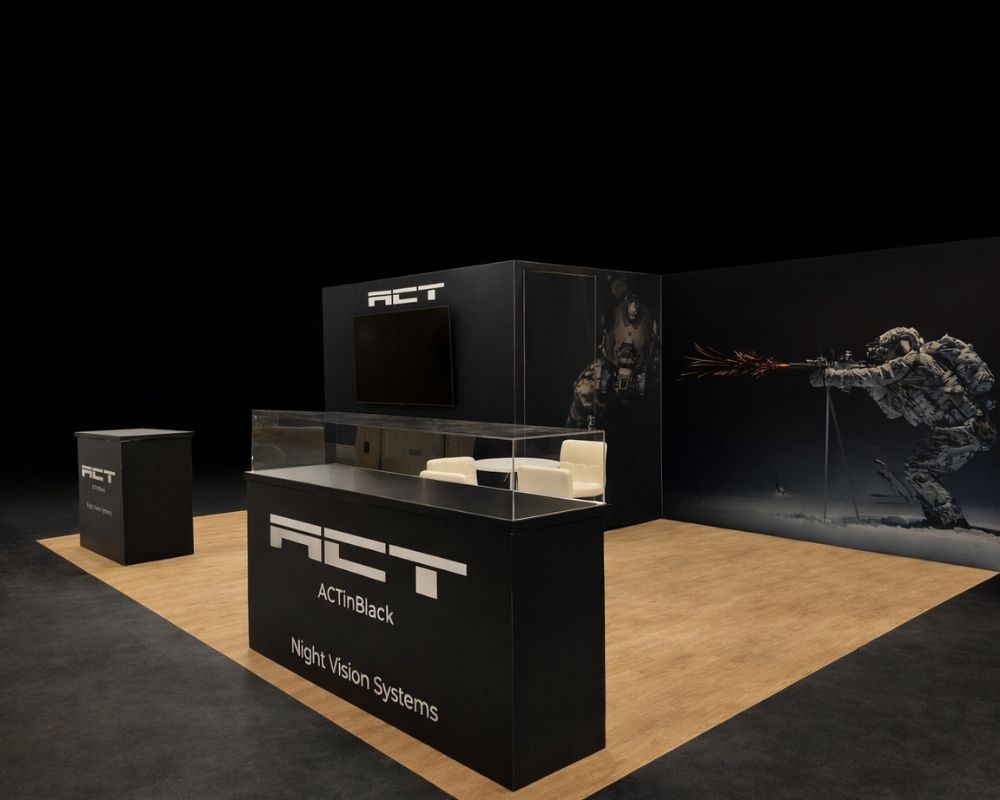
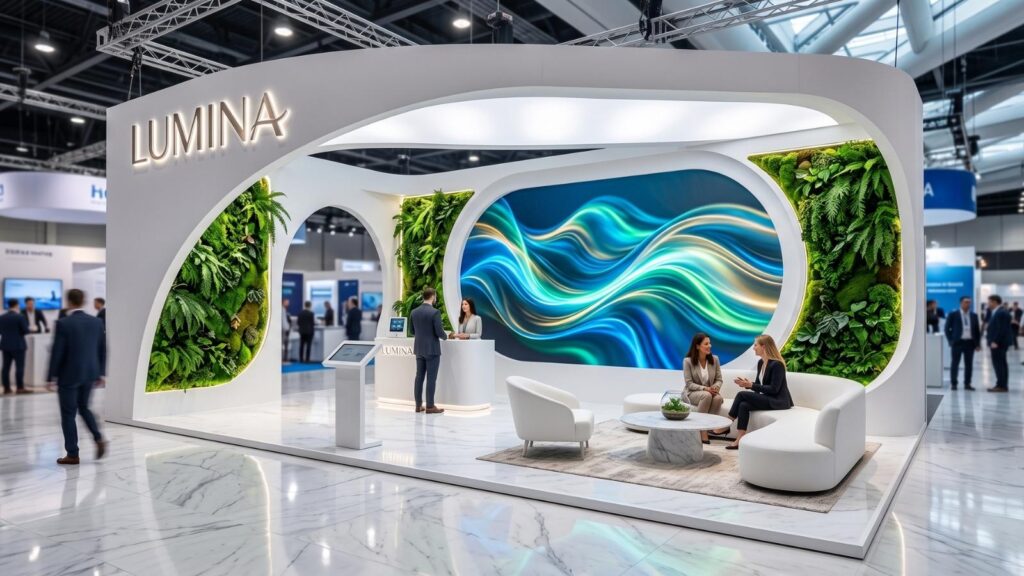
Scroll any gallery of trade show displays and everything blurs together. Big screen, curved wall, backlit logo, repeat. Nice pictures. Almost none of them explain why a design pulls a crowd while the identical booth two aisles over sits empty.
The gap is rarely money. A basic inline setup can run under $500, while a 20×20 island can pass $150,000, and both can fail for the same reason.
What separates them:
- Booth size and type, chosen deliberately
- Layout that invites instead of blocks
- Graphics readable at a glance
- Lighting treated as a design element
- Interactive features that hold attention
- Materials that reflect your brand values
We design and build exhibits at Local Exhibits, so the ideas below come with build notes, not just inspiration.
Start With Your Booth Size
Every design decision downstream depends on this one. A layout that sings in an island footprint suffocates in a 10×10.
The Five Booth Types
| Type | Sides Open | Typical Use | Hanging Sign |
|---|---|---|---|
| Inline (linear) | 1 | Most common and budget-friendly | No |
| Corner | 2 | Doubles visibility for a small premium | No |
| Perimeter | 1 (back wall) | Extra height allowance | No |
| Peninsula | 3 | Larger displays, higher structures | Yes |
| Island | 4 | Freestanding, full creative freedom | Yes |
The 10×10 inline is the most common trade show footprint and where most exhibitors start. Corner booths are the single best value upgrade, since access from two aisles roughly doubles who sees you for a modest jump in floor cost.
Peninsula and island booths unlock overhead signage and taller structures, which changes what your design can do. Our breakdown of trade show booth sizes covers what each footprint realistically holds.
Match Ambition to Footprint
A 10×20 should not attempt five things at once. One clear message wall, one focused demo point, and an obvious path in.
A 20×20 gets room to separate product display from conversation: demo counter, branded wall, hidden storage, and a small meeting area, while staying open enough that aisle traffic still flows past.
Pro tip: if you exhibit at different footprints across the year, design a modular kit rather than a fixed build. Modular exhibits reconfigure from a 20×20 down to a 10×20 without rebuilding, and they run 40 to 60% less upfront than fully custom fabrication.
Layout Ideas That Draw People In
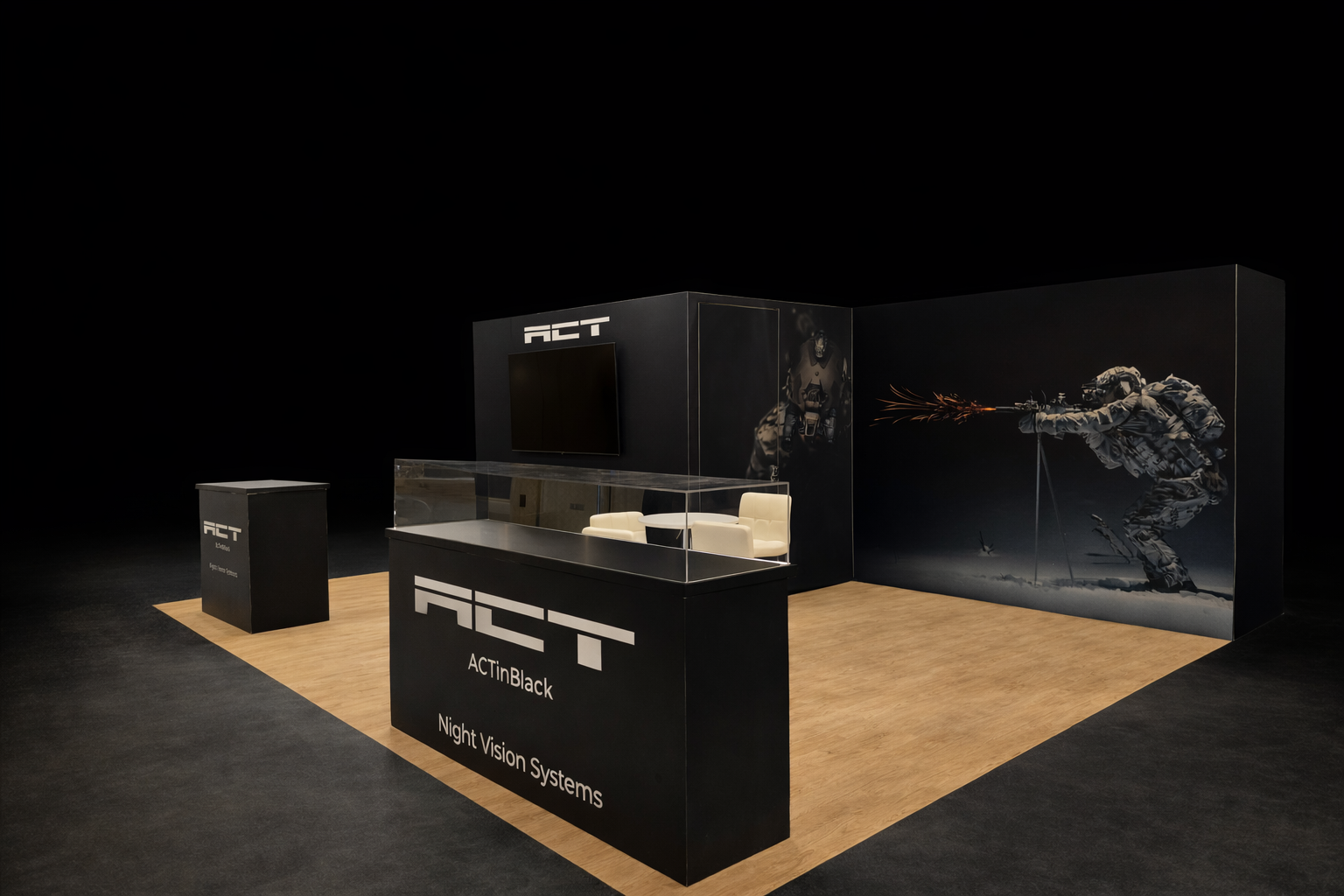
Layout is the most underrated part of booth design and the easiest thing to get wrong.
Open the Front
The fastest way to kill traffic is a table across your entrance. Open-concept layouts remove that barrier and invite people onto your carpet instead of holding them in the aisle.
Layout moves that work:
- Corner entry. Push the counter to one side, leaving a wide diagonal opening
- Zoned flow. Demo zone at the front, conversation zone mid-booth, capture zone at the back
- Product runway. A center aisle through your booth that people walk without deciding to
- Perimeter shelving. Frees the middle for bodies rather than furniture
- Recessed meeting nook. A quiet corner for the conversations that actually close
Zoned layouts function like a live funnel: attract, engage, qualify. Each zone hands the visitor to the next one.
Give People a Reason to Stay
Comfortable seating extends visits. So does anything that removes friction: a charging station, a coffee counter, somewhere to set down a bag.
Accessibility belongs in this conversation too. Wide entry points, clear floor space for wheelchairs, counters at reachable heights, and signage with strong contrast make your booth usable for every attendee rather than most of them.
Design the Focal Point First
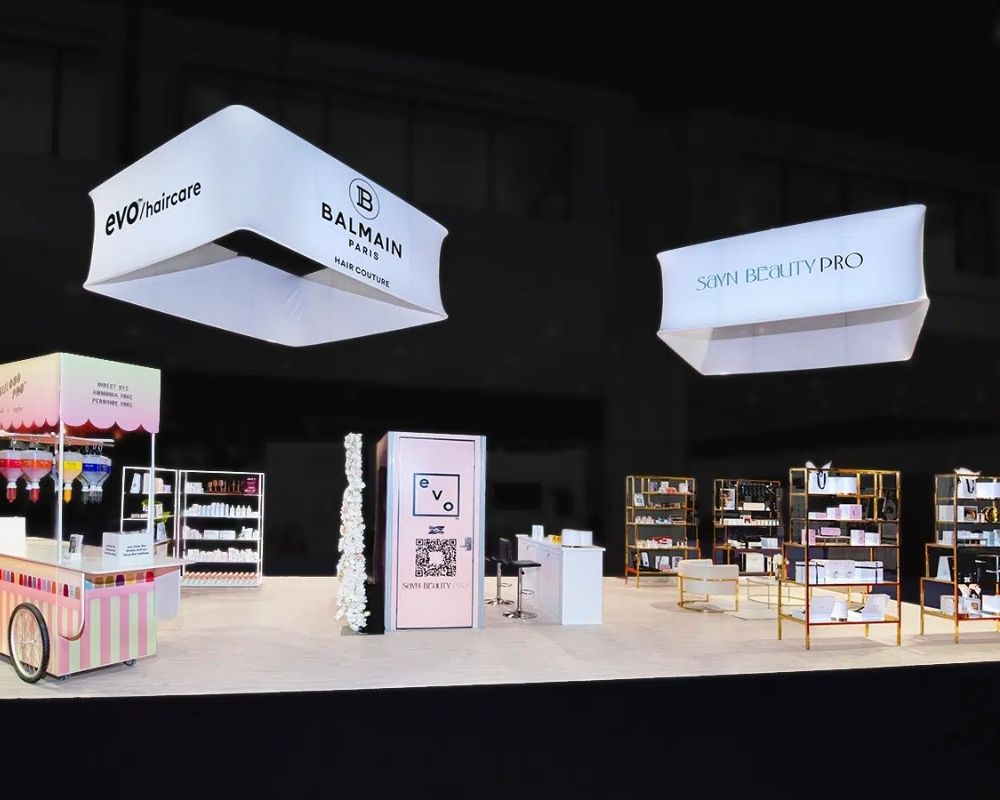
Every booth needs one thing the eye lands on. A suspended sculpture, an illuminated product pedestal, a video wall, a single oversized object.
Decide what that is, then arrange everything else around it. Booths without a focal point read as a wall of stuff, and a crowd never forms around stuff.
Graphics That Tell Your Brand Story
Your graphics do the talking before anyone reaches your booth.
Lead With One Message
Attendees scan a trade show floor the way they scan a feed. Your headline needs to read at 20 feet and answer what you do, not what you are called.
Clear signage beats clever signage. A specific claim like “cut freight costs 25%” outperforms a tagline nobody can decode.
Build a Cohesive Package
Consistent branding across the back wall, counters, floor graphics, staff shirts, and even the business card in someone’s pocket measurably improves recall after the show.
Elements that should match:
- Color scheme, ideally 60% primary, 30% secondary, 10% accent
- Typography, one or two faces maximum
- High-quality images, printed at proper resolution for large format
- Tone of voice across every panel and handout
A unique color is one of the cheapest ways to differentiate. In a hall of gray, navy, and white, one saturated hue does more work than an extra thousand dollars of structure.
Show, Do Not Describe
Product demos and dynamic displays communicate faster than any paragraph. If your product moves, show it moving. If it is too large to ship, run video or a 3D model.
Put your brand story where people stand still: a side panel, a looping screen, or a QR code linking to digital content they can read on the plane home.
Lighting Ideas That Carry the Design
Lighting is the highest return per dollar in booth design, and the first thing cut when budgets tighten.
Layer It Three Ways
- Ambient lighting fills the space and creates a welcoming atmosphere
- Accent lighting adds drama and flair around focal points
- Spotlights highlight specific products and organize visitor flow
Dynamic lighting can also guide people through the booth, pulling them from the entrance toward the demo and then to the counter without anyone giving directions.
Color Temperature Sets the Mood
Warm light (2700K to 3000K) reads as inviting and suits hospitality, food, and lifestyle brands. Cool light (4000K to 5000K) reads as precise and suits technology, medical, and industrial exhibitors.
Test your palette under similar conditions before you print. Venue lighting mutes reds and shifts yellows, and a color that sang on your monitor can go flat under a convention hall ceiling.
Cost-Effective Lighting Wins
LED lighting no longer costs extra and uses 75 to 80% less energy than halogen or fluorescent for equivalent output.
Cheap ideas with visible impact:
- Backlit SEG fabric panels instead of printed rigid ones
- LED strip lighting along shelves and counter edges
- Uplighting on a column or tower
- Animated LED elements to create motion, which pulls the eye harder than any static graphic
Interactive Booth Ideas Worth Building
Interactive features increase engagement and dwell time. They also give your booth staff something to talk about besides the weather.
Ideas Ranked by Effort
| Idea | Setup Effort | Best For |
|---|---|---|
| QR code to digital content | Low | Any booth, any budget |
| Product configurator on a tablet | Low | Complex or customizable products |
| Branded game with a leaderboard | Medium | Gamified lead capture |
| Live demonstrations on a schedule | Medium | Physical products |
| Photo moment or branded backdrop | Medium | Social sharing |
| AR product preview | High | Large equipment |
| VR walkthrough | High | Facilities, installations |
Gamified lead capture is the sleeper pick. A quiz or challenge makes the sign-up enjoyable, and the questions you build into the game qualify the lead while the person is still playing.
An Instagram-worthy photo opportunity extends your reach past the venue. Every post carries your booth to people who never walked the hall.
Engage More Than One Sense
Sensory elements create memory that visuals alone do not. Texture on a wall, background audio at conversation level, coffee brewing at the corner.
Keep it restrained. There is a fast line between immersive and exhausting.
Materials, Shapes, and Sustainability
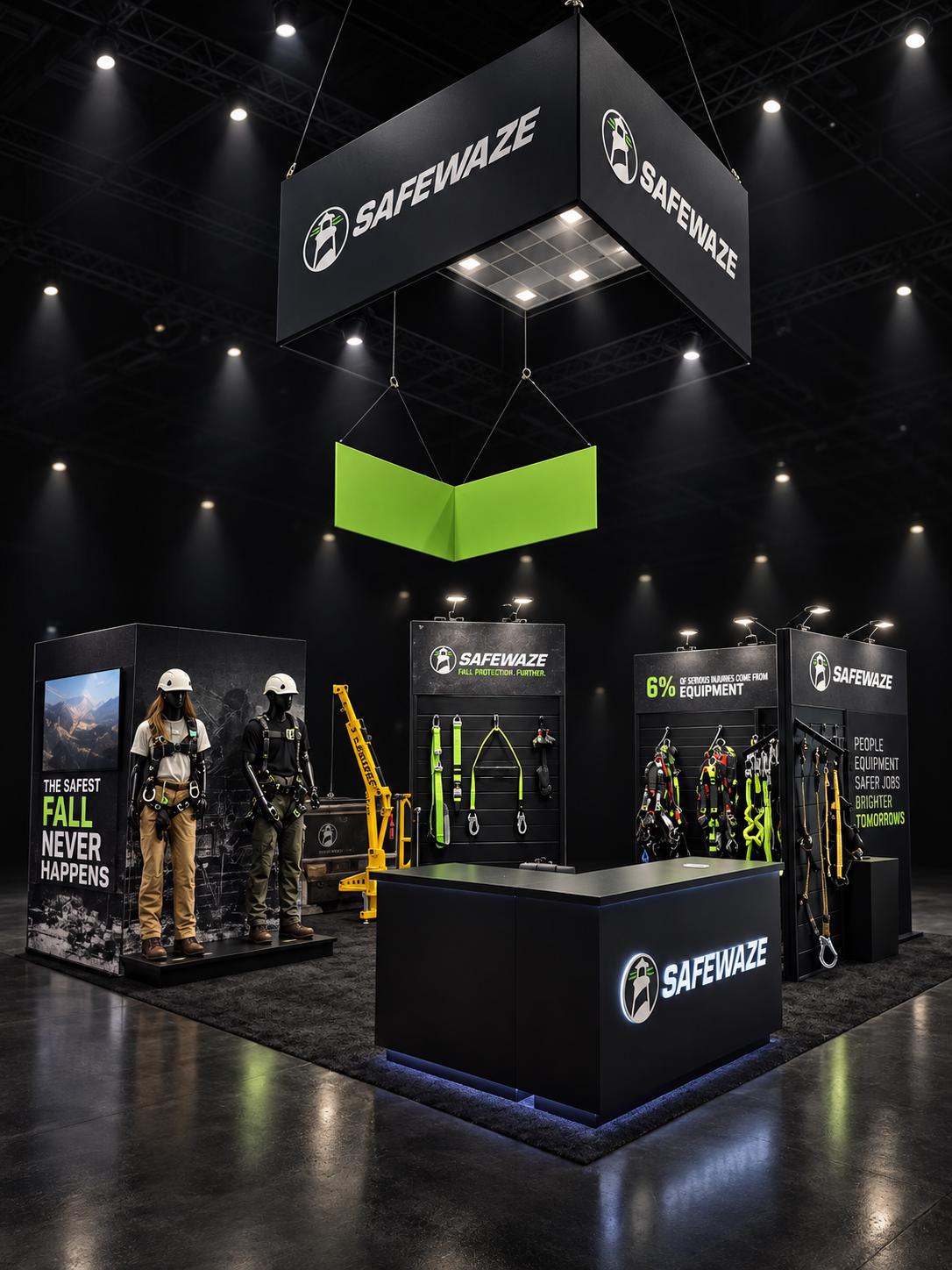
The structural choices signal as much about your brand as the graphics do.
Break the Rectangle
Unique shapes stand out because almost nothing on a trade show floor is curved. Arches, angled walls, hexagonal counters, and organic forms all read as intentional in a hall of boxes.
Materials do similar work:
- Wood slats for warmth and texture
- Perforated metal for an industrial, technical look
- Living or moss walls for wellness and sustainability brands
- Translucent panels that glow when backlit
- Terrazzo or stone-look surfaces for premium positioning
Sustainable Choices Are Now Expected
Sustainability moved from differentiator to baseline in most North American and European markets. Procurement teams increasingly ask for documentation.
Practical swaps: modular aluminum frames instead of build-and-burn wood, dye-sublimation fabric graphics on SEG frames instead of rigid substrate, LED over halogen, and reusable flooring over single-use carpet. Aluminum extrusion is recyclable, needs no adhesives, and reconfigures for years.
The graphic replacement model helps the math. When you rebrand or launch, only the printed panels change while the frame stays in circulation.
Booth Ideas on a Tight Budget
Good design is not a spending contest. Some of the sharpest booths on any floor cost a fraction of their neighbors.
What Things Actually Cost
| Item | Typical Range |
|---|---|
| 10×10 inline floor space | $1,000 to $2,000 |
| Basic inline display setup | Under $500 |
| Custom 10×10 exhibit build | $10,000 to $20,000 |
| 10×20 exhibit | $26,000 to $40,000 |
| 20×20 island | $90,000 to $150,000+ |
| Graphic refresh on existing frame | Around $1,500 |
Companies that rent instead of buying save roughly 50% against the full cost of purchasing and storing their own hardware.
Where to Spend and Where to Save
- Spend on: graphics and lighting. They deliver the most visual impact per dollar and determine whether anyone notices you.
- Save on: furniture, flooring, and structure. Rent them. Nobody has ever chosen a vendor because of the counter.
Portable trade show displays handle smaller regional events and conferences well, setting up in minutes and shipping in a case rather than a crate. For anything larger where you attend under four shows a year, renting the exhibit is usually the smarter call, and our rental versus purchase breakdown shows where the crossover point sits.
Five Ideas That Cost Almost Nothing
- Paint your back wall one bold, unexpected color
- Add floor graphics, since people scan downward in crowded aisles
- Remove the front table entirely
- Print one oversized headline instead of six small panels
- Put a QR code on every surface linking to a single landing page
Design Around Your Target Audience
The best trade show booth ideas start with a question most exhibitors skip: who exactly are you building this for?
Different Buyers Need Different Booths
An exhibition stand aimed at procurement managers looks nothing like one aimed at end users. Same industry, same product, different job to do.
| Audience | What They Need to See | Design Priority |
|---|---|---|
| Technical buyers | Specs, live product, proof | Demo station, seating |
| Executives | Outcomes, credibility, peers | Private meeting space |
| End users | Hands-on trial | Open access, low counters |
| Distributors and partners | Margins, support, logistics | Quiet corner, printed collateral |
Pick the primary group before anyone sketches a wall. A booth that tries to serve all four ends up serving none of them well.
Let the Show Tell You
Every event attracts a different mix. A regional distributor show and a national tech expo call for different setups even when your product line has not changed.
Three things to check before you plan the build:
- The attendee breakdown in the show’s media kit
- Which competitors exhibit and what they typically bring
- Aisle width and hall layout, since crowded floors reward height and open floors reward footprint
Our show directory covers the major events by industry, which is a useful starting point when you are deciding how much booth a given show justifies.
Design for the Conversation You Want
Every booth is a filter. Loud games and giveaways pull volume. Quiet, product-forward setups pull fewer people with sharper intent.
Neither is wrong. What matters is matching the filter to your sales motion. Long enterprise cycles need seated conversations. Transactional sales need throughput.
Portable Displays for Smaller Events
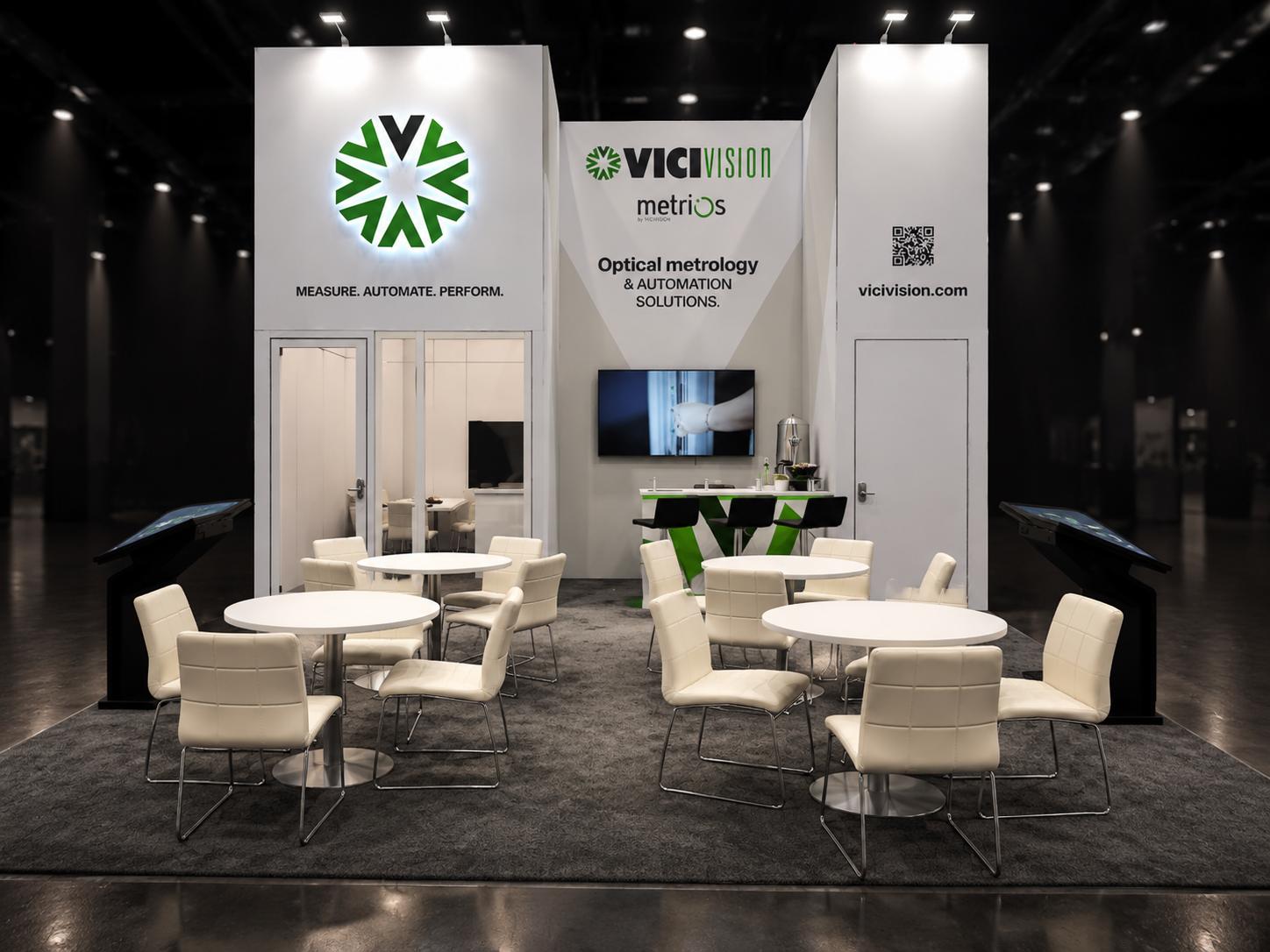
Not every event deserves a crated exhibit and a rigging crew. Regional shows, industry conferences, recruiting fairs, and customer events all reward something you can carry.
What Portable Actually Includes
- Retractable banner stands that set up in under a minute
- Pop-up fabric backdrops on collapsible frames
- Tabletop display stands for shared or half-booth spaces
- Portable counters that double as storage cases
- Tension fabric arches for a bigger presence in a small footprint
Portable trade show displays travel in wheeled cases, ship as checked luggage, and need no labor call at either end. For a two-person team at a regional exhibition, that alone saves more than the display costs.
Where Portable Falls Short
Lightweight structures cannot carry heavy shelving, mounted screens, or overhead signage. They also read as portable when placed next to a fabricated build, which matters at flagship shows and matters very little at a local conference.
Good rule: portable for anything under 200 attendees or under a two-hour drive. Fabricated or modular for anything you would fly a team to.
Our pop-up display options cover the smaller end of the calendar, which frees budget for the two or three events where a full booth display earns its cost.
Build a Two-Tier Kit
Smart exhibitors run two setups rather than one compromise.
A portable kit handles the twelve small events. A modular system handles the three big ones. Graphics stay consistent across both, so customers see the same brand whether they meet you in a hotel ballroom or a convention hall.
Key Elements Every Booth Setup Needs
Creativity gets the attention. These elements decide whether that attention turns into sales.
The Non-Negotiables
Whatever the size or budget, a working booth setup includes:
- A readable headline stating what you do
- One focal point worth walking toward
- An easily accessible entry with no furniture in the way
- Working power and lighting, confirmed with the venue in advance
- Hidden storage for cases, coats, and boxes
- A lead capture method your staff can use one-handed
- Somewhere to stand and talk without blocking the aisle
Storage is the one people forget. Boxes stacked behind a counter undo every other design decision in about four seconds.
Plan the Boring Logistics Early
Freight deadlines, drayage, labor calls, electrical orders, and rigging approvals all have cutoffs weeks before the show. Miss one and the creative work never gets seen.
A rough timeline that holds up:
| Weeks Out | Action |
|---|---|
| 12+ | Book space, confirm booth type and size |
| 8 to 10 | Approve design, order fabrication |
| 6 | Submit electrical, rigging, and labor orders |
| 4 | Finalize graphics, print, and proof |
| 2 | Ship freight, confirm marshaling yard timing |
| 1 | Brief staff, test tech, pack the kit |
We handle that sequence for clients through support services, because the difference between a smooth install and a scramble is almost always paperwork filed on time.
Think Past the Show
Design decisions carry a post-show cost that rarely appears in the quote.
Ask three questions before you approve a build:
- Where does it live between events, and who pays for storage?
- What refreshes cheaply when you rebrand or launch something new?
- Does it reconfigure for the other footprints on your calendar?
Frames that stay and graphics that swap keep your exhibition presence current for a fraction of a rebuild. That is where reusable systems quietly beat one-off fabrication, and it is worth asking about before you fall in love with a render.
Local Exhibits Builds the Booth You Just Imagined
Somewhere in the ideas above is the version of your booth that works. It usually looks simpler than the one you pictured: fewer messages, more light, a clear way in, and one thing worth walking over to see.
Worth carrying into your next design brief:
- Pick your booth type before you pick your look
- Open the front and design a real path through
- One headline, readable at 20 feet
- Budget lighting as a line item, not a leftover
- Choose modular or rental if your footprint changes
- Sustainability documentation is now table stakes
Bring us a sketch, a Pinterest board, or a rough idea scribbled on the back of a business card. Our designers turn it into something buildable, then handle fabrication, freight, install, and dismantle. See what that looks like in our work, or call and describe what you have in mind.
Frequently Asked Questions
How to make a booth attractive?
Open the front, use one bold headline readable at 20 feet, add layered lighting, and create a single focal point that draws people from the aisle.
What are the trends in trade show booth design for 2026?
Modular reusable structures, sustainable materials like recycled aluminum and rPET fabric, LED-integrated lighting, interactive product demos, and strategic simplicity over cluttered walls.
How much does a 20×20 trade show booth cost?
A custom 20×20 island typically runs $90,000 to $150,000 or more. Modular versions cost 40 to 60% less upfront, and rentals cut costs further.
What are common booth design mistakes?
Tables blocking the entrance, too much text, no lighting budget, cluttered messaging, and designs that ignore venue height and sightline rules.