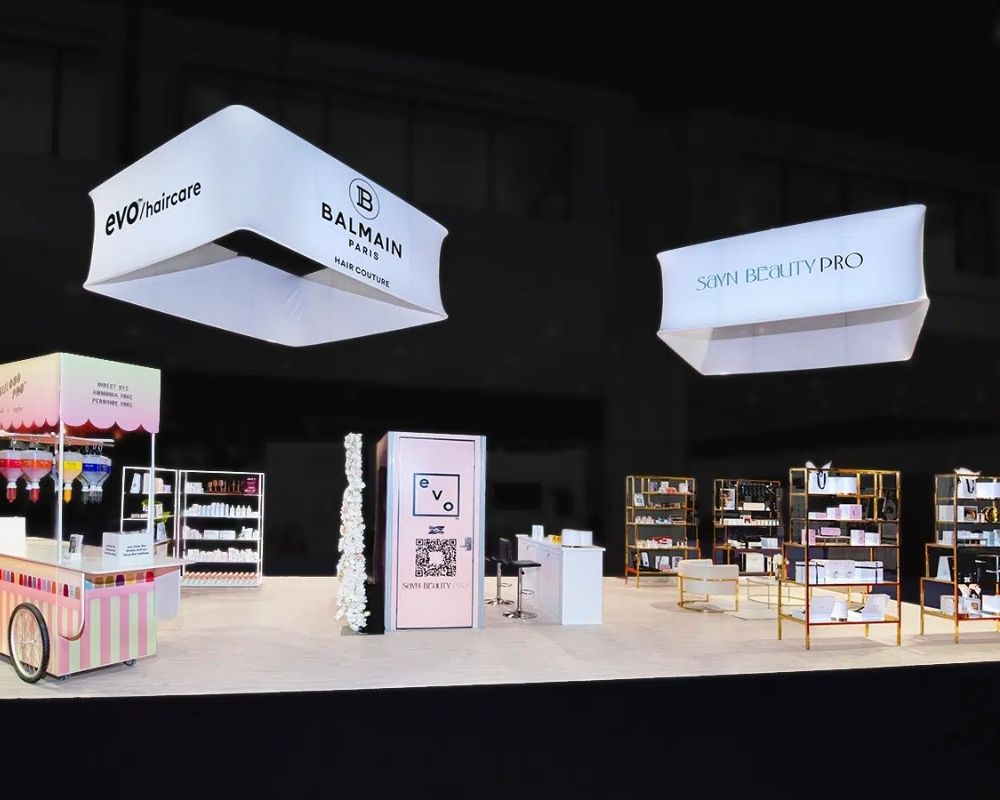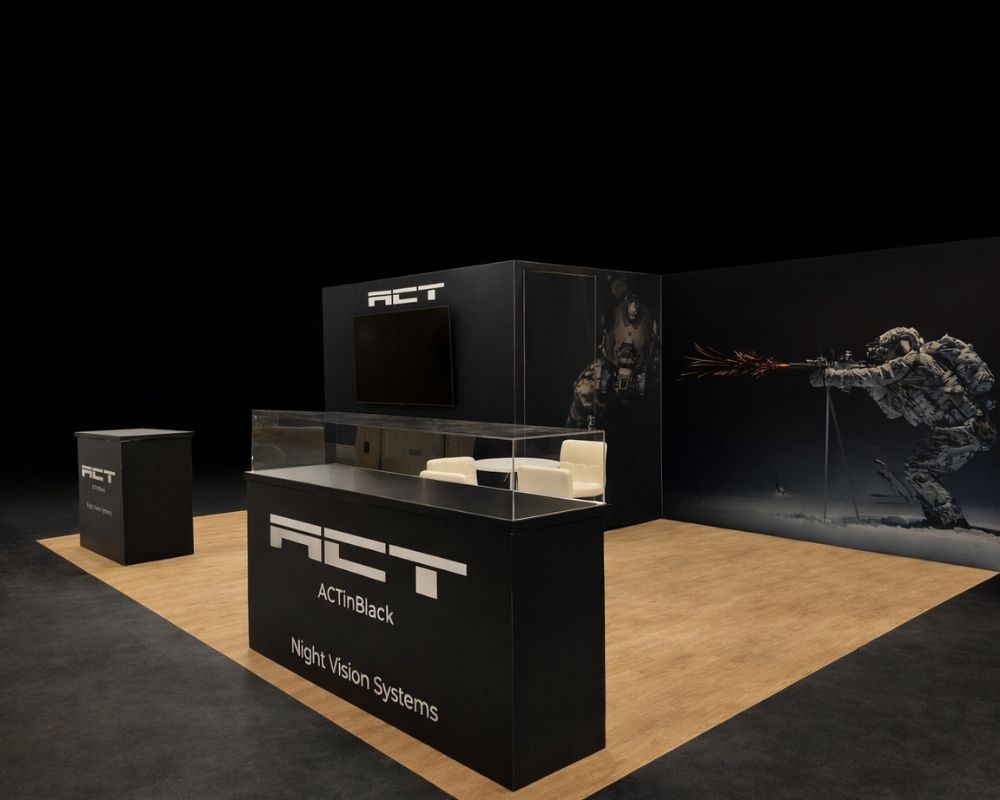
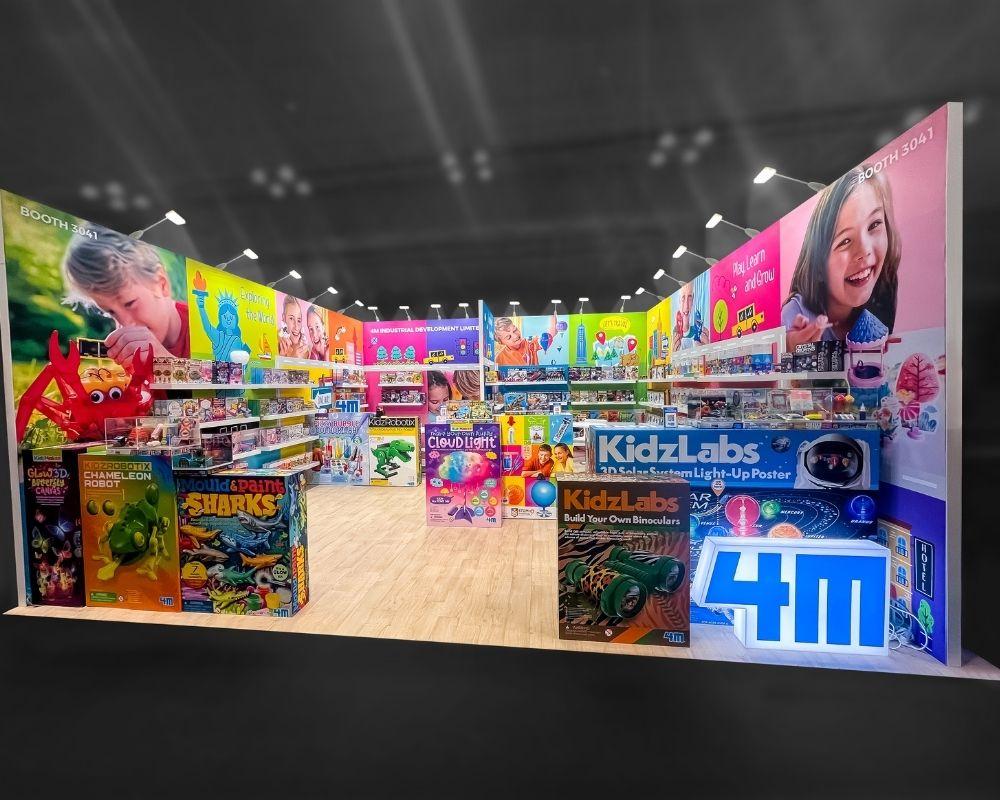
The floor space invoice arrives first and looks manageable. Then comes drayage. Then electrical. Then a labor bill nobody budgeted for.
Total exhibiting costs typically run three to five times your booth space fee once design, shipping, labor, and travel land. The Exhibitor Advocate reports that 62% of event budgets go to non-revenue-generating expenses like space, services, and shipping.
In this article, we will cover:
- Booth space rental by the square foot
- Fabrication and rental pricing models
- Material handling, the budget killer
- Labor, electrical, and internet
- Sample budgets by booth size
We quote these numbers daily at Local Exhibits, so what follows are working ranges rather than teaser rates.
The Short Answer on Total Cost
Most exhibitors land somewhere between $20,000 and $150,000 depending on booth size, city, and how custom the build is.
| Booth Size | Realistic All-In Range |
|---|---|
| 10×10 inline | $8,000 to $20,000 |
| 10×20 | $20,000 to $45,000 |
| 20×20 island | $60,000 to $150,000+ |
| 30×30 island | $100,000 to $250,000+ |
The full cost of exhibiting in a 10×10, with every expense accounted for, typically runs $10,000 to $30,000 per show depending on the city and the show’s prestige.
How the Budget Splits
A workable allocation looks like this:
- Booth space rental, paid to the organizer: 20 to 30% of total
- Booth build or rental, covering design and fabrication: 35 to 45%
- Services and logistics, meaning I&D labor, drayage, shipping, electrical, storage: 30 to 45%
The common shorthand is 30% space, 30% design, 40% operations. Whichever version you use, add a contingency of 10 to 20% for the invoices that appear after the show closes.
For scale, companies allocate around 31.6% of their annual marketing budget to events, which is the largest single channel line for most B2B firms.
Booth Space Rental Costs
This is the entry ticket, not the price of admission.
What the Data Actually Says
You will see $200 to $300 per square foot quoted widely. Treat that with caution.
The 2025 Annual Survey of Exhibition Rates, audited by EVOLIO Marketing, puts exhibit space at $20 to $138 per square foot with a median around $59. EXHIBITOR Magazine reports the same range.
The $200+ figures apply to premium positions at flagship shows, not to the typical event on your calendar. Prime positioning at the largest industry events can run $100 to over $1,000 per square foot.
| Booth Size | At $59/sq ft Median | At $138/sq ft High |
|---|---|---|
| 10×10 (100 sq ft) | $5,900 | $13,800 |
| 10×20 (200 sq ft) | $11,800 | $27,600 |
| 20×20 (400 sq ft) | $23,600 | $55,200 |
| 30×30 (900 sq ft) | $53,100 | $124,200 |
Premium positions near entrances or main aisles carry 20 to 50% surcharges. Sometimes worth it. Often not, once you compare a corner booth mid-aisle against a premium spot at the front where everyone is still finding their bearings.
Exhibit Design and Fabrication Costs
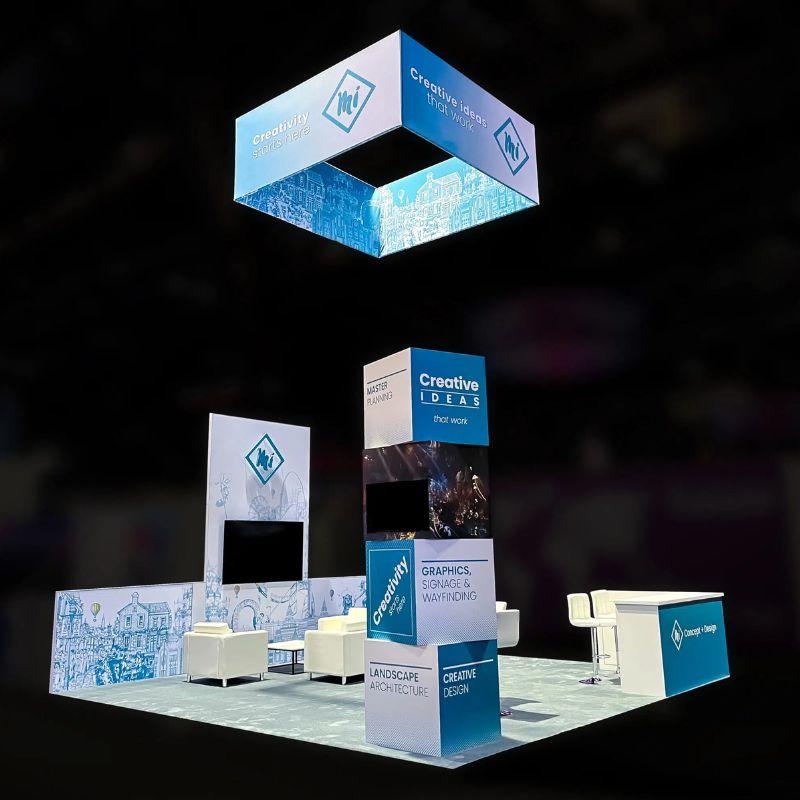
The second-largest line, and the one you have the most control over.
Per Square Foot Estimates
Custom work runs $100 to $250 per square foot depending on structure, materials, technology, and finish detail. Premium exhibits with extensive customization can exceed $500 per square foot.
| Configuration | Custom Build | All-In Rental |
|---|---|---|
| 10×10 | $10,000 to $20,000 | $3,500 to $6,500 |
| 10×20 | $15,000 to $40,000 | $7,500 to $14,000 |
| 20×20 island | $30,000 to $80,000 | $16,000 to $40,000 |
| 30×30 island | $150,000 to $300,000 | $40,000 to $80,000 |
Custom exhibit purchases typically cost around double the equivalent rental price.
What Drives the Number
The biggest price factors, in rough order of impact:
- Structure type. Custom millwork costs far more than an aluminum extrusion system with a built-in graphic track
- Height and complexity. Towers, arches, and double decks carry engineering costs
- Technology. LED walls, interactive screens, and AV integration add fast
- Materials. Raw material price fluctuations move quotes year to year
- Lighting. Setups range from around $3,000 to $150,000 depending on ambition
- Timeline. Rush jobs add 25 to 40% to labor, shipping, and graphics
Design and engineering typically take 6 to 8 weeks, with crating and logistics consuming the rest of a three- to four-month lead time. Our custom exhibit team works to that schedule, and starting later almost always costs more.
Material Handling Is the Budget Killer
Drayage catches more first-time exhibitors off guard than any other line item.
How It Works
Drayage is the fee the general contractor charges to move your crates from the loading dock to your booth space and back. Freeman, Encore, and Shepard handle most of it, and you cannot shop around because the contractor is exclusive to the show.
It is billed by weight per hundredweight, typically $80 to $250 per 100 pounds, with a minimum charge whether you hit it or not. Expressed per pound, that is roughly $1.50 to $4.00, billed in both directions.
| Exhibit Weight | Estimated Drayage |
|---|---|
| 200 to 400 lbs (10×10 kit) | $300 to $1,600 |
| 1,500 lbs | $1,200 to $3,750 |
| 2,000 lbs | $1,600 to $4,000 |
| 3,000 lbs (20×20 custom) | $2,400 to $7,500 |
Return drayage adds a similar charge, so a mid-sized exhibit commonly totals $3,000 to $8,000 across both moves.
How to Shrink It
Weight is the only variable you control, and it is worth real money.
- Ship lighter materials: aluminum frames and fabric graphics over wood and rigid substrate
- Consolidate into fewer crates to avoid repeated minimum charges
- Send everything in one shipment rather than staggered deliveries
- Use a builder who optimizes freight as part of the service
Our drayage guide walks through exactly how the calculation works and where the surcharges hide.
Labor, Electrical, and Internet
The third tier of costs, all billed by venue-exclusive contractors.
Installation and Dismantle
Union labor is required in most major convention cities. Rates run $100 to $200 per hour straight time in many markets and can reach $125 to $475 per hour depending on the city and trade, with overtime at 1.5x.
Ask for a fixed I&D quote rather than an hourly estimate. Hourly is the most common source of a surprise invoice, since nobody knows how long the install took until after it happened.
Utilities and Show Services
| Service | Typical Cost |
|---|---|
| Electrical | $500 to $3,000 |
| Internet and wi-fi | $500 to $2,000 |
| Carpet rental | $3 to $8 per sq ft |
| Furniture rental | $200 to $1,000+ |
| Booth cleaning | Varies by size |
| 55″ monitor rental | $600 to $1,200 per show |
Utilities and services commonly add 20 to 40% on top of booth cost depending on requirements. Order in advance: on-site ordering carries a markup that is entirely avoidable.
That monitor line is worth reading twice. Renting a screen for a single show often costs more than buying one outright.
Our support services team files these orders against the advance deadlines, which is where the savings actually happen.
Travel, Staffing, and Marketing
The costs that never appear in a booth quote.
People Cost
Staffing covers salaries for time on the floor, flights, hotels, per diems, and ground transport. A five-person team at a three-day show in a convention center city runs $6,000 to $15,000 before anyone scans a badge.
Employee training and travel costs are the major intangible line here. The days your team spends preparing and traveling are days they are not selling elsewhere.
Marketing and Collateral
- Pre-show email and advertising
- Printed collateral and product literature
- Promotional items, tiered by audience
- Lead retrieval subscription or rental
- Post-show follow-up campaigns
Budget $2,000 to $10,000 for a mid-sized program, more if you are launching something.
Long-Term Storage
Owned exhibits need somewhere to live between shows. Storage, refurbishment, and logistics on a large owned booth commonly run $15,000 to $25,000 per show year.
Skipping professional storage usually costs more in damage than it saves in fees.
Rent or Buy: Two Pricing Models
The decision that moves your total more than any other.
When Renting Wins
Renting makes sense for single events, first-time exhibitors, and any company whose footprint changes between shows. You avoid storage, maintenance, refurbishment, and depreciation entirely.
Custom rentals also offer flexibility across different exhibit space configurations, so the same program covers a 10×20 at one show and an island at the next. Companies that rent save roughly 50% against the full lifecycle cost of owning.
When Buying Wins
Buying pays off when you exhibit at four or more shows a year in a consistent configuration. Amortized across a season, a custom booth beats repeated rental fees, and you control the asset.
A middle path often works best: a modular system you own for anchor shows, plus rentals for the regional events. Our rental versus purchase breakdown runs the crossover math.
Two Sample Budgets
Numbers on a page beat percentages.
Scenario One: 10×10 at a Mid-Size National Show
| Line Item | Estimate |
|---|---|
| Floor space (100 sq ft at $59) | $5,900 |
| Rental booth package | $4,500 |
| Drayage (350 lbs, both ways) | $900 |
| Electrical | $350 |
| I&D labor | $700 |
| Shipping | $900 |
| Travel and staffing (2 people) | $3,500 |
| Marketing and collateral | $1,200 |
| Subtotal | $17,950 |
| Contingency at 15% | $2,700 |
| Total | ~$20,650 |
Scenario Two: 20×20 Island at a Major Show
| Line Item | Estimate |
|---|---|
| Floor space (400 sq ft at $59 median) | $23,600 |
| Custom build, amortized or rental | $30,000 |
| Drayage (~3,000 lbs plus surcharges) | $7,000 to $9,000 |
| Electrical, rigging, internet | $4,000 |
| I&D labor | $6,000 |
| Shipping both ways | $4,500 |
| Travel and staffing (6 people) | $12,000 |
| Marketing, AV, promotional items | $6,000 |
| Subtotal | ~$94,000 |
| Contingency at 15% | $14,000 |
| Total | ~$108,000 |
Where the Real Savings Are
Not where most exhibitors look.
Costs You Cannot Negotiate
Booth space, drayage, union labor rates, and venue utilities are set by the organizer and the general contractor. Shopping harder does not shrink them. You can only estimate accurately, choose cities deliberately, and keep the exhibit light.
Costs You Can Control
- Weight. Every pound you remove cuts drayage twice
- Timeline. Booking early avoids 25 to 40% rush premiums
- Advance ordering. Utilities cost less before the deadline than on site
- Fixed-quote I&D. Removes the most common surprise invoice
- Reuse. Refreshing graphics on an existing frame costs a fraction of a rebuild
- Equipment ownership. Buy the monitor instead of renting it at every show
Exhibitors attending five or more events a year see 15 to 20% lower cost per lead than those attending one or two, largely from reused assets and a refined process.
Judge Cost Against Return
Trade show leads cost around $112 against $259 for a field sales lead, and strong exhibitors hit a cost per lead of $150 to $300 with pipeline-to-cost ratios of 5:1 to 10:1.
A show that costs $40,000 and produces $300,000 in pipeline is cheap. One that costs $12,000 and produces nothing is not. Measuring booth performance properly is how you tell the two apart.
What Affects Trade Show Exhibit Pricing
Two booths of identical size can quote $18,000 apart. Knowing why lets you decide where to spend.
The Structure Type Is the Biggest Lever
The single largest factor in exhibit fabrication cost is what the booth is made of.
| Build Type | Relative Cost | Notes |
|---|---|---|
| Tube or extrusion system | Lowest | Reusable frame, graphics swap out |
| Hybrid (system plus custom elements) | Moderate | Best value for most exhibitors |
| Full custom millwork | Highest | One of a kind, heaviest, most expensive to ship |
A same-sized tube system booth can land at half the price of custom millwork covering the same footprint, and it weighs far less, which cuts material handling on every show after the first.
That weight difference compounds. Custom wood construction looks superb and then bills you for it twice, once in fabrication and again in drayage.
The Next Major Factors
- Height and structural complexity. Towers, arches, and double decks require engineering and rigging
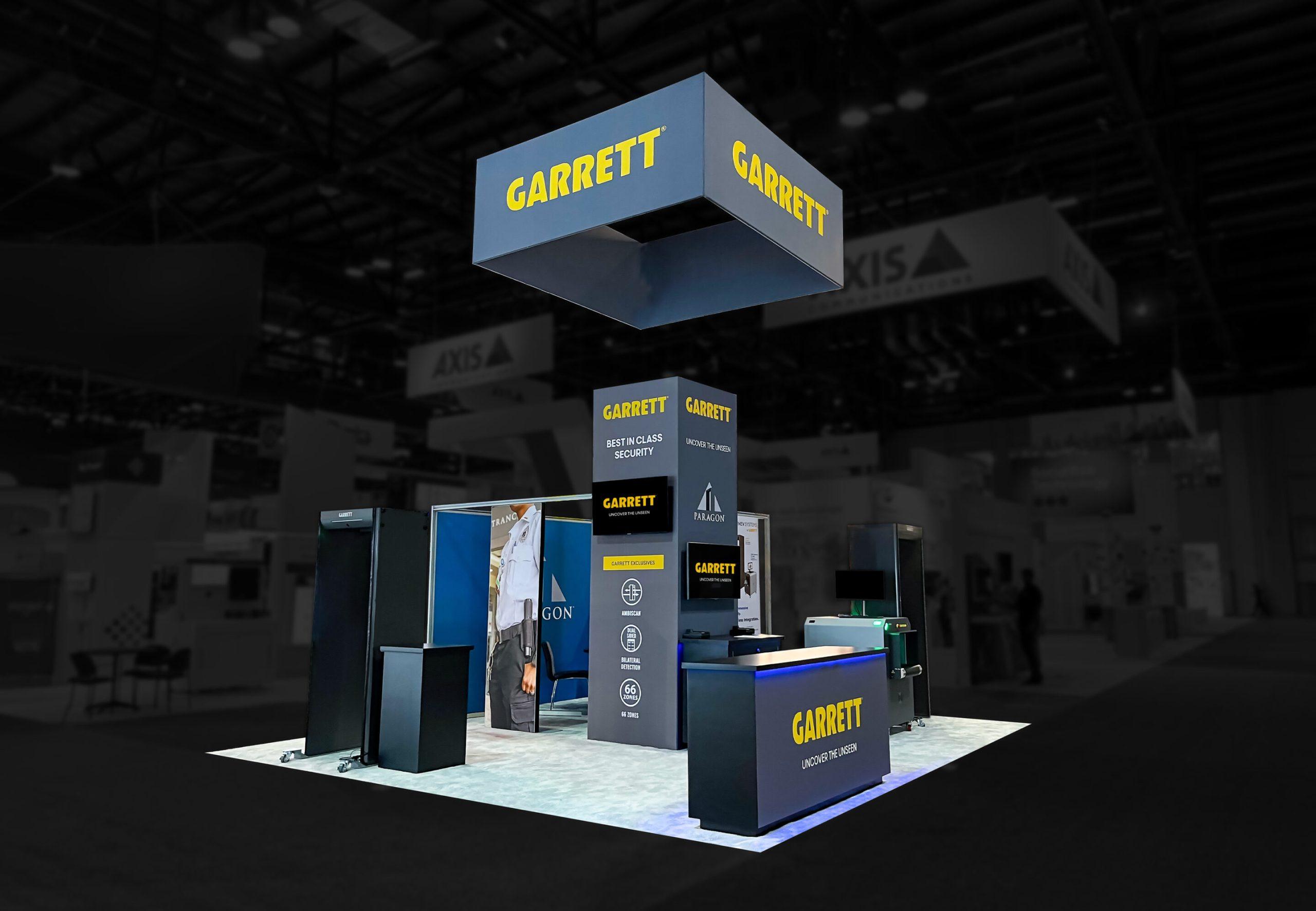
- Hanging signs. Overhead signage adds fabrication cost plus rigging labor, but frees floor space below
- Technology. LED walls, interactive screens, and AV integration move a quote fastest
- Lighting. The cheapest path to maximum visual impact, and worth protecting when budgets tighten
- Graphics. Backlit fabric costs more than printed panels and reads brighter from a distance
- Finish detail. Custom laminates, stone-look surfaces, and millwork edges all price separately
Raw Materials Move the Number
Market price fluctuation on aluminum, plywood, and printed substrates affects quotes year over year. A design priced in January may quote differently in August.
Lock your build early if the budget is fixed. A quote held for four months protects you from a materials swing you cannot control.
Pro tip: if the budget is tight, cut structure before you cut lighting or graphics. A simple frame with sharp graphics and good lighting outperforms an elaborate build lit by convention hall fluorescents.
Exhibit Pricing Models Explained
How a builder quotes matters as much as what they quote.
Three Common Structures
Per square foot. The industry shorthand, usually $100 to $250 per square foot for custom work. Useful for early budgeting, less useful once a real design exists.
Itemized. Every element priced separately: structure, graphics, flooring, furniture, freight, labor. Transparent, but the total floats until the last invoice clears.
Fixed turnkey. One number covering design, fabrication, graphics, shipping, install, and dismantle. You know your trade show investment before you commit to floor space.
| Model | Best For | Risk |
|---|---|---|
| Per square foot | Early planning | Not a real quote |
| Itemized | Exhibitors who manage their own logistics | Surprise line items |
| Fixed turnkey | Anyone who wants budget certainty | Less flexibility to swap elements |
Watch the Service Fee
Some exhibit houses quote a low structure price and recover margin through project management fees, graphic production markups, or handling charges applied at each stage.
Ask three questions of any pricing structure:
- Does this include graphics, or are they quoted separately?
- Is installation and dismantle a fixed number or hourly?
- Who orders show services, and is there a markup on them?
A quote that answers all three clearly is usually the honest one, even if the headline number looks higher.
The Costs Nobody Puts in the Quote
Several real expenses never appear on a booth builder’s estimate.
Intangible and Internal Costs
The major intangible cost is your team’s time. Employee training, travel days, and the selling hours lost to a three-day show are real money that never shows up as a line item.
Add these to your mental total:
- Staff hours spent in pre-show training and planning
- Travel days on either side of the show
- Internal marketing time producing collateral
- Sales capacity diverted from existing pipeline
Long-Term Storage Costs
An owned exhibit needs a climate-controlled home between shows, plus inventory tracking, refurbishment, and crate repair. That runs $15,000 to $25,000 per show year on a large custom build.
Skipping professional storage to save a few thousand usually produces damage that costs more than the storage did. Crates crush. Graphics fade. Panels warp.
Special Handling and Other Surprises
Material handling fees climb when your shipment triggers special handling: loose pieces, uncrated items, mixed shipments, or anything requiring extra work at the dock.
Internet costs at trade shows deserve their own warning. Venue wi-fi is billed separately from electrical, runs $500 to $2,000 for basic bandwidth, and is often required for lead capture and live demos.
Other costs that appear late:
- Overtime labor when install runs past scheduled hours
- On-site utility ordering markups
- Rush graphic production at 25 to 40% premiums
- Booth cleaning, billed by square footage
- Cancelled or reduced floor space penalties
Choosing a Trade Show Partner
The vendor decision quietly determines whether your budget holds.
Booth Builder vs Exhibit Partner
A trade show booth builder fabricates what you ask for. A true exhibit partner handles the parts you did not know to ask about.
| Handled By | Booth Builder | Exhibit Partner |
|---|---|---|
| Design and fabrication | Yes | Yes |
| Graphics production | Sometimes | Yes |
| Freight and drayage optimization | Rarely | Yes |
| Show services ordering | No | Yes |
| Rigging and EAC paperwork | No | Yes |
| Install and dismantle crew | Subcontracted | In-house or managed |
| Storage and asset management | No | Yes |
| Post-show reporting | No | Often |
The gap between those two columns is where most budget overruns live. Every item a builder does not handle becomes a task your marketing team manages between other work, usually against a deadline they did not know existed.
Questions Worth Asking
Before signing with any exhibit house:
- Is installation quoted as a fixed number?
- Who files show service orders, and by which deadline?
- How do you optimize crate weight to control drayage?
- Where are my exhibit assets stored, and what does that cost annually?
- Can I see a comparable build you delivered at this venue?
What Comprehensive Service Actually Saves
Significant cost savings rarely come from a cheaper structure. They come from avoiding rush fees, catching advance-order deadlines, shipping lighter, and never paying overtime because install started on schedule.
Our team handles design, fabrication, project management, freight, and on-site execution as one scope, and we will build you an estimate against your actual show and footprint rather than a per-square-foot guess. A solid plan built twelve weeks out beats a cheaper quote approved three weeks late, every time.
Get a Real Number Before You Commit
Most budget overruns are not caused by expensive booths. They are caused by line items nobody knew to plan for: drayage billed both ways, overtime labor, on-site utility markups, and rush fees for a design approved three weeks too late.
Before you sign a space contract:
- Use $59 per square foot as your space baseline, not $200
- Assume total cost of three to five times the space fee
- Estimate drayage from your exhibit’s crated weight, doubled
- Order utilities before the advance deadline
- Get I&D quoted as a fixed number
- Hold back 10 to 20% for contingency
We quote design, fabrication, freight, install, and dismantle as one fixed number, so the only floating line on your budget is the one the general contractor controls. Send us your show and booth size, and we will put real figures against it.
Frequently Asked Questions
How to exhibit at a trade show?
Book floor space with the organizer, design or rent a booth, order services before the deadline, ship freight to the advance warehouse, then staff and follow up.
How much does a 20×20 trade show booth cost?
All-in, $60,000 to $150,000 depending on city and build. The structure alone runs $30,000 to $80,000 custom, or $16,000 to $40,000 as a rental.
What is the difference between a trade show and an exhibition?
They mean the same thing in practice. “Trade show” is the common U.S. term for industry-only events; “exhibition” is used more widely internationally.
Are trade shows still worth it?
For most B2B companies, yes. Trade show leads cost roughly $112 versus $259 for field sales calls, and 81% of attendees have buying authority.